
[MASCOM GLOBAL] Desiccant Masterbatch is commonly used to help manage moisture-related defects in plastic processing. Understanding its functions, recommended dosage, and application conditions can help manufacturers improve product quality and optimize production costs.
1. What Is Desiccant Masterbatch?
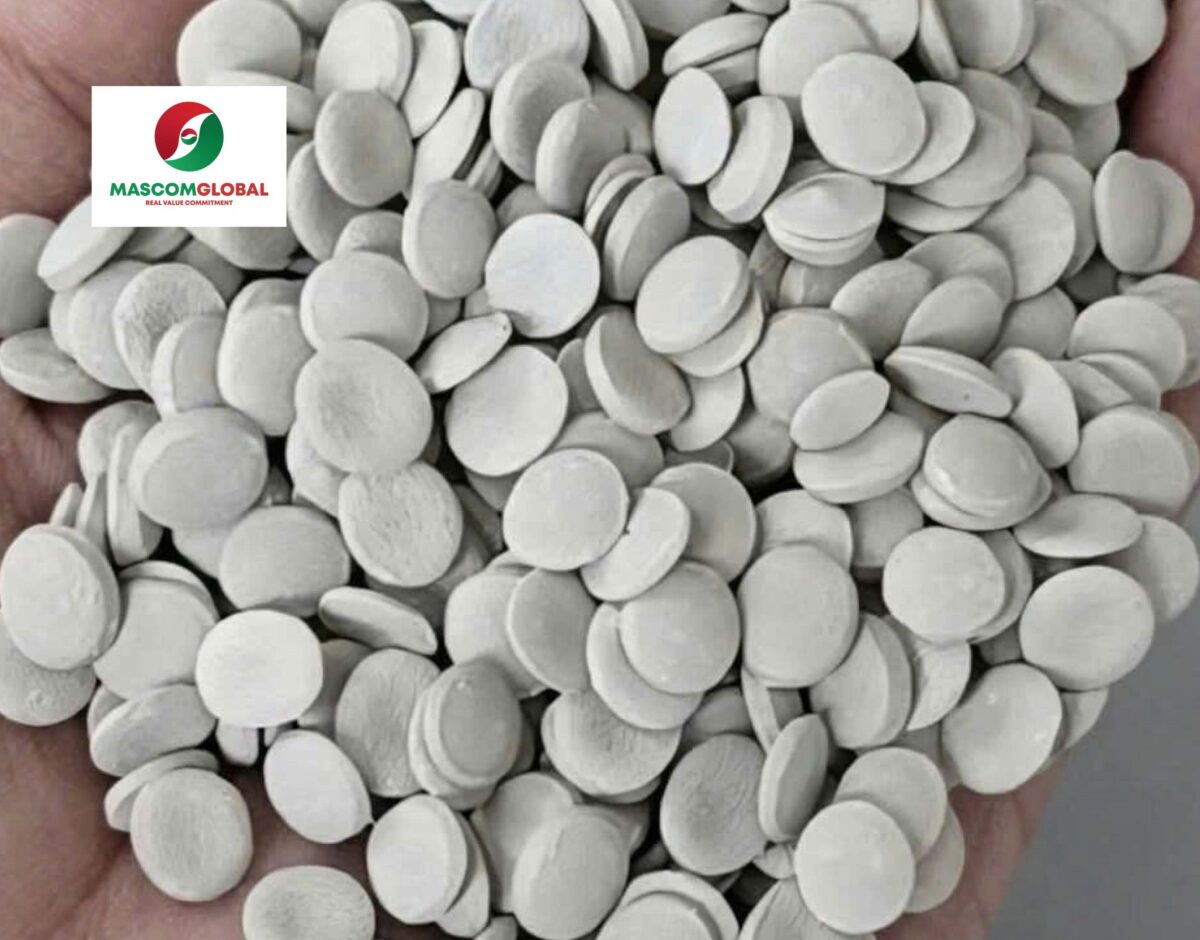
Desiccant Masterbatch is a functional additive masterbatch designed to help reduce the effects of moisture during plastic processing. It typically contains moisture-absorbing components, such as calcium oxide (CaO), dispersed in a polymer carrier compatible with the target resin.
It is commonly used in applications involving recycled plastics, where residual surface moisture may contribute to processing defects.
However, Desiccant Masterbatch does not replace proper drying for hygroscopic polymers such as PET, PA (nylon), and PC. These materials absorb moisture into their polymer structure and may require dedicated drying equipment before processing.
2. Main Benefits of Desiccant Masterbatch
2.1. Reducing Bubbles and Pinholes
Excess moisture can vaporize during extrusion, creating bubbles, pinholes, and other surface defects. When used under suitable conditions, Desiccant Masterbatch can help reduce these moisture-related problems and improve the appearance of finished products.
2.2. Improving Plastic Film Quality
In blown film production, moisture-related defects can affect film uniformity, surface appearance, and overall product quality. Desiccant Masterbatch may help manufacturers reduce these defects when moisture is the underlying cause.
It is particularly relevant to PE film applications and the processing of recycled plastic materials.
2.3. Supporting Recycled Plastic Processing
Recycled plastic materials may contain residual moisture due to washing, storage, or handling. Desiccant Masterbatch can help manage the effects of this moisture during processing, potentially improving production stability and reducing defect rates.
Nevertheless, the effectiveness depends on the initial moisture level, material composition, and processing conditions.
2.4. Optimizing Production Efficiency
By helping reduce moisture-related defects, an appropriate Desiccant Masterbatch formulation may lower material waste and improve production efficiency. The actual benefits should be evaluated through production trials and quality checks.
3. Recommended Desiccant Masterbatch Dosage
The appropriate dosage depends on the moisture content of the raw materials, the type of polymer, the masterbatch formulation, and the processing conditions.
The following levels can be used as initial trial references, not universal dosage standards.
| Dosage | Typical trial purpose |
| 1-2% | Initial trials for materials with relatively low moisture levels |
| 2-3% | A starting range for evaluating moisture-related defects in suitable applications |
| 3-5% | Further trials when moisture-related problems persist, subject to supplier recommendations |
The optimal dosage should always be confirmed through testing and the manufacturer's technical guidance. Increasing the dosage does not necessarily improve performance and may affect processing or final product properties.
How to Calculate the Dosage?
For example, if the total mixture is 100 kg and the target Desiccant Masterbatch dosage is 3% of the total mixture:
- Desiccant Masterbatch: 3 kg
- Other raw materials: 97 kg
- Total mixture: 100 kg
Always confirm whether the supplier specifies the dosage as a percentage of the total mixture or based on the weight of the base resin, as these calculation methods are different.
4. Important Factors When Using Desiccant Masterbatch
To achieve consistent results, manufacturers should consider the following factors:
- Initial moisture content
Check the moisture level of the raw materials, particularly recycled plastics and materials exposed to humid storage conditions.
- Polymer compatibility
Select a masterbatch with a carrier resin compatible with the base material, such as PE or PP, according to the intended application.
- Processing conditions
Extrusion temperature, screw configuration, production speed, and material residence time may influence the final results.
- Dosage optimization
Start with the supplier's recommended dosage and adjust it based on production trials. Monitor bubbles, pinholes, film appearance, and other relevant quality indicators.
- Raw material storage
Store materials properly to minimize moisture exposure before processing. Desiccant Masterbatch should not be treated as a substitute for appropriate material handling or drying procedures.
- Special attention to hygroscopic polymers
PET, PA, and PC may require dedicated drying because moisture can be absorbed into the polymer itself. Consult the resin supplier's processing recommendations before selecting a moisture-control solution.
5. Desiccant Masterbatch Solutions from MASCOM Global
Choosing the right additive is essential for maintaining stable production and consistent plastic product quality. Different applications may require different formulations depending on the resin type, moisture level, processing method, and target product properties.
MASCOM Global provides masterbatch and additive solutions for plastic manufacturing applications. To identify a suitable moisture-control solution, manufacturers should evaluate the following information:
- Base resin: PE, PP, or another polymer.
- Application: Blown film, recycled plastic processing, or other extrusion applications.
- Current production issues: Bubbles, pinholes, surface defects, or other suspected moisture-related problems.
- Processing conditions: Equipment type, production speed, and operating temperature.
- Target dosage: The dosage recommended by the supplier and validated through production trials.

By assessing these factors, manufacturers can better identify a suitable solution for their production requirements and avoid unnecessary additive consumption.
For specific product recommendations, dosage guidance, and technical information, contact MASCOM Global with details of your material, application, and current processing challenges.
6. Conclusion
Desiccant Masterbatch is a useful tool for managing moisture-related defects in suitable plastic processing applications, especially blown film production and recycled plastic processing. The correct formulation and dosage can help improve product appearance, reduce waste, and support more stable manufacturing.
However, performance depends on the material, moisture level, and processing conditions. Manufacturers should follow supplier recommendations, conduct production trials, and use appropriate drying procedures whenever necessary to achieve reliable results.