
Blog
How to Choose the Right PVC Compound for Electrical Cables
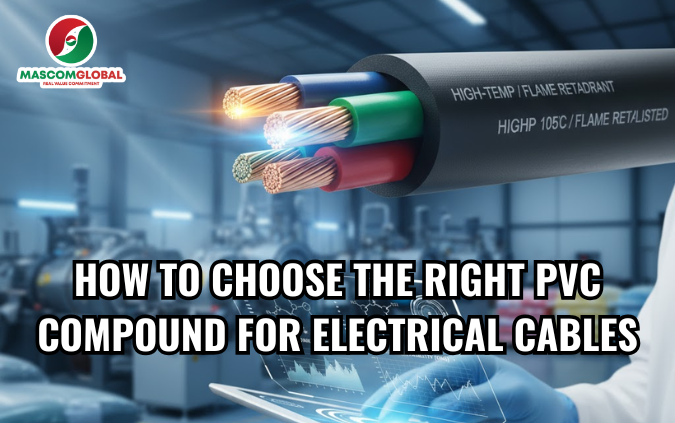
In the manufacturing of electrical cables, the performance, safety, and lifespan of the final product hinge entirely on one critical component: the PVC compound for electrical cables. This material serves as the primary insulator and protective jacketing, defining the cable’s resistance to heat, fire, moisture, and abrasion.
Choosing the wrong compound can lead to costly product failures, regulatory non-compliance, and catastrophic safety issues. When sourcing this vital material, procurement managers and R&D teams must move beyond price and focus on technical specifications and supplier reliability.
At Mascom Global, we engineer PVC compounds designed for excellence in electrical applications, guaranteeing the integrity and durability of your cables under the toughest conditions. This guide outlines the five non-negotiable factors you must evaluate when selecting your PVC compound supplier.
How to Choose the Right PVC Compound for Electrical Cables
The complexity of electrical environments—ranging from household wiring to heavy-duty industrial infrastructure—requires specialized material properties. Here are the crucial elements determining the quality of your cable compound:
1. Electrical Resistance and Insulation Strength
The primary function of a PVC compound for electrical cables is insulation. This material must possess high dielectric strength to prevent current leakage and maintain circuit integrity.
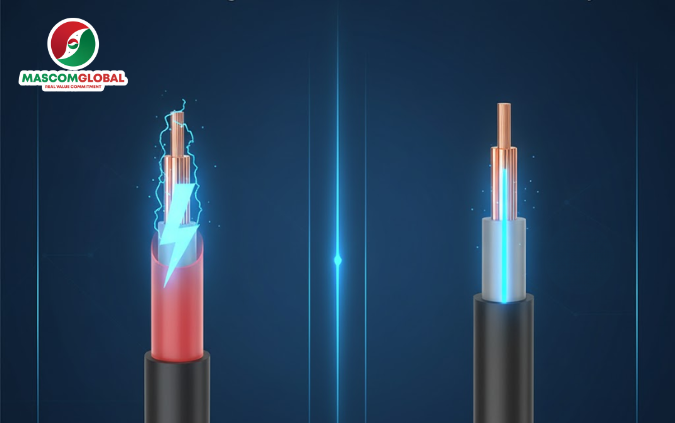
- Dielectric Strength: This measures the maximum electric field the material can withstand without electrical breakdown. For safety and compliance, your compound must maintain high dielectric properties even under mechanical stress or elevated temperatures.
- Volume Resistivity: This determines how strongly the material resists electrical current flow. A high resistivity compound ensures minimal energy loss and efficient power transmission. Always request a compound with proven stability in its insulation characteristics across its operational lifespan.
2. Thermal Stability and Temperature Rating
Electrical cables generate heat under load, and external environmental temperatures vary widely. The PVC compound must remain stable without degrading or melting.
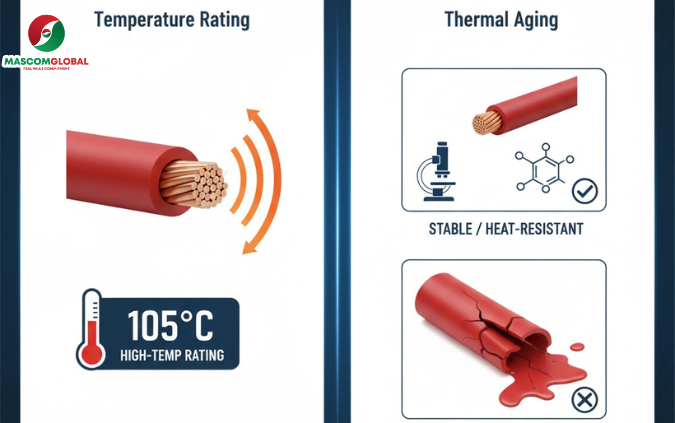
- Temperature Rating: Cables are typically rated for 70°C, 90°C, or even 105°C continuous use. Ensure your supplier can verify the compound’s performance at the required operational temperature. Lower-quality compounds can soften and deform, compromising insulation when overheated.
- Thermal Aging: Over time, heat exposure causes materials to age. A high-quality compound includes effective heat stabilizers to maintain its physical and electrical integrity over the cable’s intended service life, often decades.
3. Flame Retardancy and Safety Compliance
In any application, especially construction and public transport, fire safety is paramount. The PVC compound is the first defense against flame propagation.
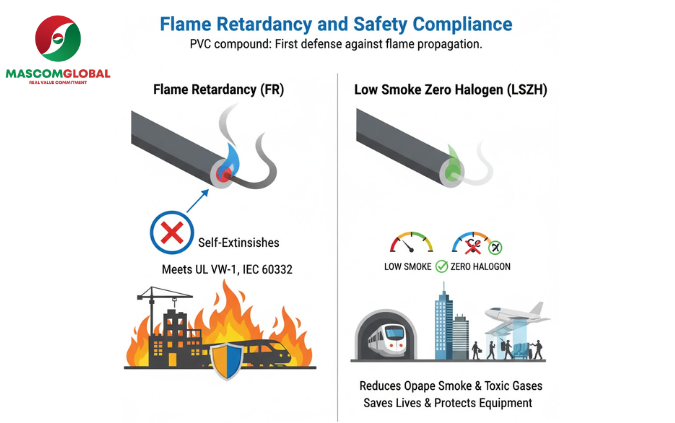
- Flame Retardancy (FR): Standard electrical PVC compounds contain additives that cause them to self-extinguish when the flame source is removed. Ensure the compound meets standards like UL VW-1 or IEC 60332.
- Low Smoke Zero Halogen (LSZH): For enclosed spaces like tunnels, aircraft, and high-rise buildings, LSZH compounds are required. These specialized materials drastically reduce the emission of opaque smoke and toxic halogen gases during a fire, saving lives and protecting sensitive equipment.
4. Processability and Extrusion Compatibility
A technically superior compound is worthless if it cannot be processed efficiently on your equipment. Manufacturers must guarantee seamless compatibility with high-speed cable extrusion lines.
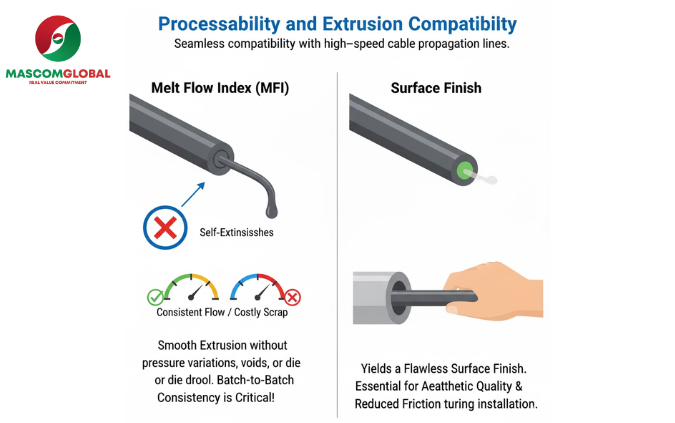
- Melt Flow Index (MFI): The compound must exhibit a consistent and optimized MFI to ensure smooth extrusion without pressure variations, voids, or die drool. Batch-to-batch consistency is critical here; deviations cause costly machine adjustments and scrap material.
- Surface Finish: The compound must yield a smooth, flawless surface finish on the jacketing, essential for both aesthetic quality and reducing friction during cable pulling and installation.
5. Environmental Compliance (RoHS, REACH)
In today’s global market, environmental regulations dictate trade. Non-compliant materials expose your company to legal risks and block market access.
- RoHS (Restriction of Hazardous Substances): This directive restricts the use of specific hazardous materials (like lead and cadmium) in electrical products. Your supplier must provide certified, fully RoHS-compliant PVC compounds.
- REACH: This EU regulation addresses the manufacturing and use of chemical substances. Choosing a supplier that fully complies with REACH ensures your supply chain is stable and legally secure for export to the European Union and other regulated markets.
Learn more: PVC Compound For Wire And Cable Vietnam – Your Reliable Sourcing Choice
The Mascom Global Advantage in Cable Materials
As a specialized supplier, Mascom Global provides materials engineered specifically for the pressures and demands of cable manufacturing. We are more than a bulk provider; we are a dedicated technical partner.
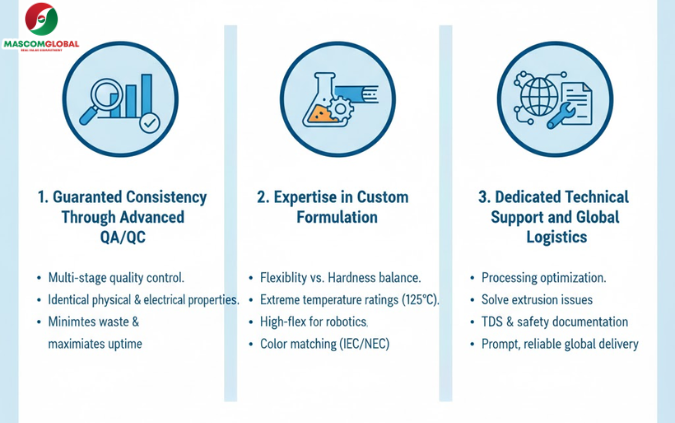
1. Guaranteed Consistency Through Advanced QA/QC
We understand that consistency is reliability. Our compounding process is subject to multi-stage quality control, guaranteeing that every single pallet of PVC compound for electrical cables maintains identical physical and electrical properties. This predictability minimizes material waste and maximizes your production uptime.
2. Expertise in Custom Formulation
Do you need a specific balance between flexibility (for tight bends) and hardness (for abrasion resistance)? Our R&D team can develop sophisticated, customized PVC formulas that meet complex requirements, including:
- Extreme temperature ratings (up to 125°C).
- High-flex compounds for robotic or winding applications.
- Color matching for global coding standards (IEC/NEC).
3. Dedicated Technical Support and Global Logistics
When you buy PVC compound from Mascom Global, you gain immediate access to our technical specialists. They can assist with processing optimization, solve extrusion issues, and provide all necessary technical data sheets (TDS) and safety documentation. Our global logistics network ensures prompt, reliable delivery, maintaining the integrity of your supply chain.
Partnering for Performance and Safety
The choice of PVC compound for electrical cables is a decision that dictates safety, cost, and reputation. By prioritizing key factors—insulation strength, thermal performance, safety compliance, process compatibility, and environmental adherence—you ensure the longevity and reliability of your final product.
Don’t settle for generic materials. Choose a specialized partner committed to delivering high-performance, compliant, and consistent solutions.
💡 At Mascom Global, our PVC compounds for electrical applications are engineered to deliver excellent insulation and flexibility under tough conditions.
Contact Information
We have different additives for your application. If you have any need, please don’t hesitate to contact with us to have the best offer. Thank you!
Phone: (+84) 925 202 888
Gmail: info@mascomglobal.com
Address: Tien Tien Industrial, Quang Tien Commune, Hoa Binh, Vietnam
My Dinh Plaza 2 Building, 02 Nguyen Hoang Str., Nam Tu Liem Dist., Hanoi, Vietnam
Facebook: Mascom Global.
