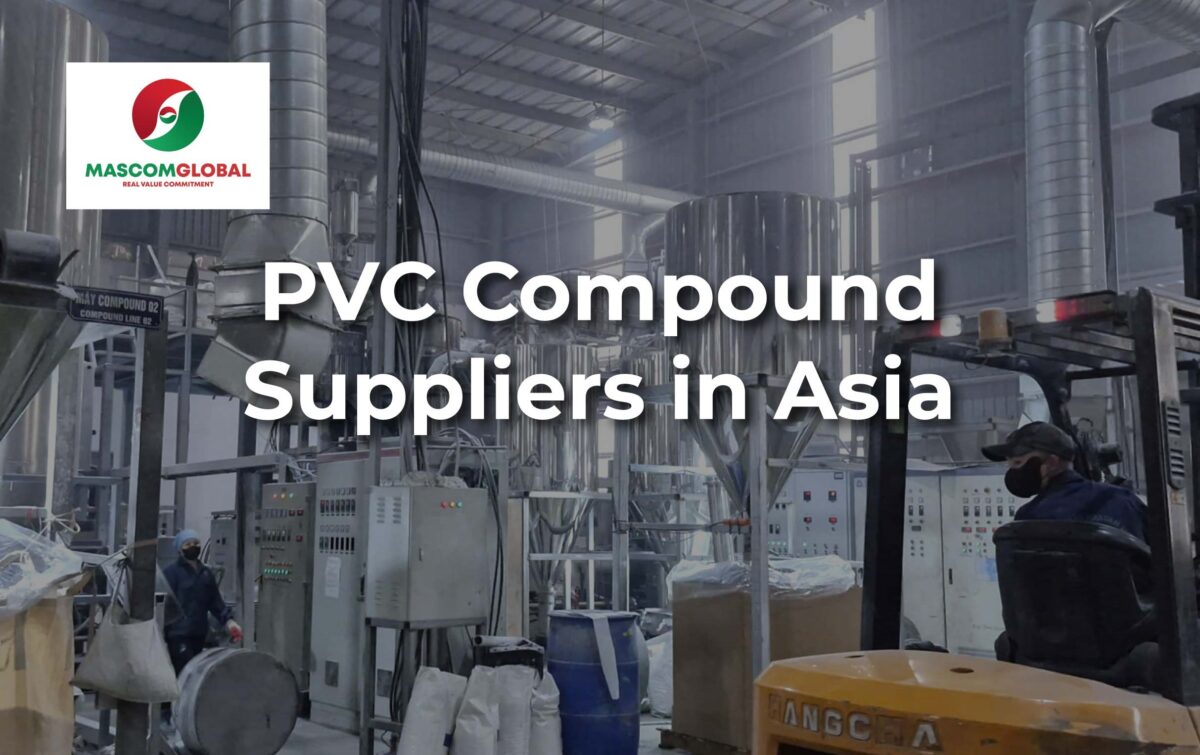
Asia has become one of the most important regions in the global plastics industry, particularly for polyvinyl chloride compound (PVC Compound). With rapid industrialization, expanding infrastructure, and growing manufacturing sectors, the demand for PVC compounds across Asia continues to rise. PVC compounds are widely used in applications such as wire and cable insulation, automotive components, construction materials, medical devices, and consumer goods. As a result, the region hosts a large number of PVC compound manufacturers and suppliers that serve both local and international markets.
The Growing PVC Compound Market in Asia
The Asia-Pacific region dominates the global PVC industry thanks to strong production capacity and increasing demand from construction, electrical, and automotive industries. Many multinational chemical companies and regional manufacturers operate in the area, supplying a wide range of PVC compounds including rigid PVC, flexible PVC, flame-retardant grades, and specialty formulations.
Several countries in Asia, including China, Japan, South Korea, India, Taiwan, and Southeast Asian nations, have developed extensive petrochemical infrastructure and advanced polymer processing technologies. This has allowed Asian manufacturers to produce high-quality PVC compounds at competitive prices, making the region a global hub for PVC production and export.
Major PVC Compound Suppliers in Asia

Formosa Plastics Corporation
One of the most well-known PVC producers in Asia is Formosa Plastics Corporation, headquartered in Taiwan. Founded in 1954, the company is a core member of the Formosa Plastics Group and plays a major role in the global PVC supply chain. The company manufactures a wide range of PVC resins and related materials used for compounding and downstream applications. Its production capacity reaches millions of tons annually, making it one of the world’s largest PVC producers.
Formosa Plastics supplies materials to industries such as construction, packaging, automotive manufacturing, and electronics. The company’s strong research capabilities and international presence have helped it maintain a leading position in the Asian PVC market.
Chemplast Sanmar Limited
India is another important market for PVC compound production. Chemplast Sanmar Limited, headquartered in Chennai, is one of the country’s major manufacturers of PVC resins and chlorochemicals. Established in the 1960s, the company has grown into a significant supplier of PVC materials used in pipes, profiles, cables, and industrial products.
Chemplast Sanmar operates multiple manufacturing facilities across India and serves both domestic and export markets. Its products support infrastructure development, water management systems, and electrical applications across the region.
Kaneka Corporation
Japan is known for its advanced chemical industry and high-quality polymer production. Kaneka Corporation, founded in 1949 and headquartered in Osaka, is a diversified chemical manufacturer that produces functional plastics and specialty materials, including PVC-related products and additives used in compounding processes.
Kaneka focuses heavily on innovation, sustainability, and high-performance polymer solutions. The company supplies materials for electronics, automotive components, construction products, and industrial applications.
Engro Polymer & Chemicals Limited
In South Asia, Engro Polymer & Chemicals Limited is one of the largest PVC producers. Based in Karachi, Pakistan, the company manufactures PVC, vinyl chloride monomer (VCM), and caustic soda for both domestic consumption and export markets. The company has a production capacity of hundreds of thousands of tons of PVC annually and supplies materials to construction, packaging, and cable industries.
Engro Polymer has played a key role in developing the polymer industry in Pakistan and contributes significantly to regional supply chains.
Emerging PVC Compound Suppliers in Southeast Asia
Southeast Asia is also becoming a rapidly growing center for PVC compound manufacturing. Countries such as Vietnam, Thailand, Malaysia, and Indonesia are attracting investment in plastic production due to competitive labor costs, strong export infrastructure, and growing domestic demand.
Vietnam, in particular, has seen significant growth in plastic compounding facilities. Local manufacturers supply customized PVC compounds for cable insulation, footwear, automotive parts, and construction materials. With increasing foreign investment and improved manufacturing technologies, the country is becoming an important supplier of PVC compounds to international markets.
Thailand and Malaysia also host several petrochemical complexes that produce PVC resins and compounds used in regional manufacturing industries.
Key Applications Driving Demand

The demand for PVC compounds in Asia is primarily driven by several major industries:
- Construction and infrastructure – PVC pipes, window profiles, flooring, and insulation materials.
- Electrical and electronics – Cable insulation and protective sheathing.
- Automotive manufacturing – Interior components, seals, and coatings.
- Medical and healthcare – Tubing, blood bags, and flexible medical devices.
- Consumer goods – Footwear, toys, and household products.
Because PVC compounds can be customized with additives, stabilizers, plasticizers, and fillers, manufacturers can tailor them to meet specific performance requirements for each application.
Future Outlook for PVC Compound Suppliers in Asia
The future of the PVC compound industry in Asia looks promising. Rapid urbanization, infrastructure development, and the expansion of manufacturing sectors continue to drive demand for PVC materials. Additionally, many companies are investing in environmentally friendly additives, recyclable materials, and sustainable production processes.
As global supply chains continue to shift toward Asia, PVC compound suppliers in the region are expected to strengthen their role in the international plastics market. Companies that focus on product quality, innovation, and sustainability will likely gain a competitive advantage in the years ahead.