
Blog
Common Defects of Filler Masterbatch in Film Blowing – Applications and Solutions
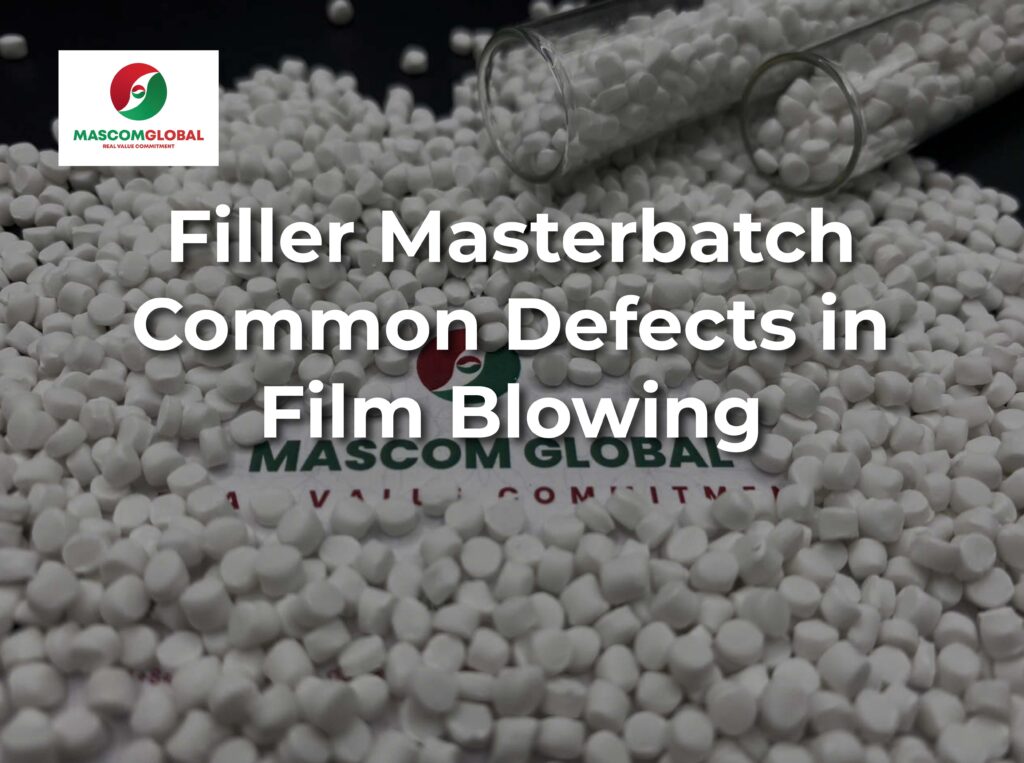
In the plastic packaging industry, Filler Masterbatch plays an essential role in reducing production costs while improving product strength, stiffness, and opacity.
However, during the film blowing process, improper formulation or handling of filler can lead to several processing and quality issues that directly affect the appearance and mechanical performance of the final film.
Below are the most common problems and professional solutions, summarized from the practical experience of Mascom Global JSC — a leading manufacturer of Filler, Color, and Additive Masterbatch in Vietnam.
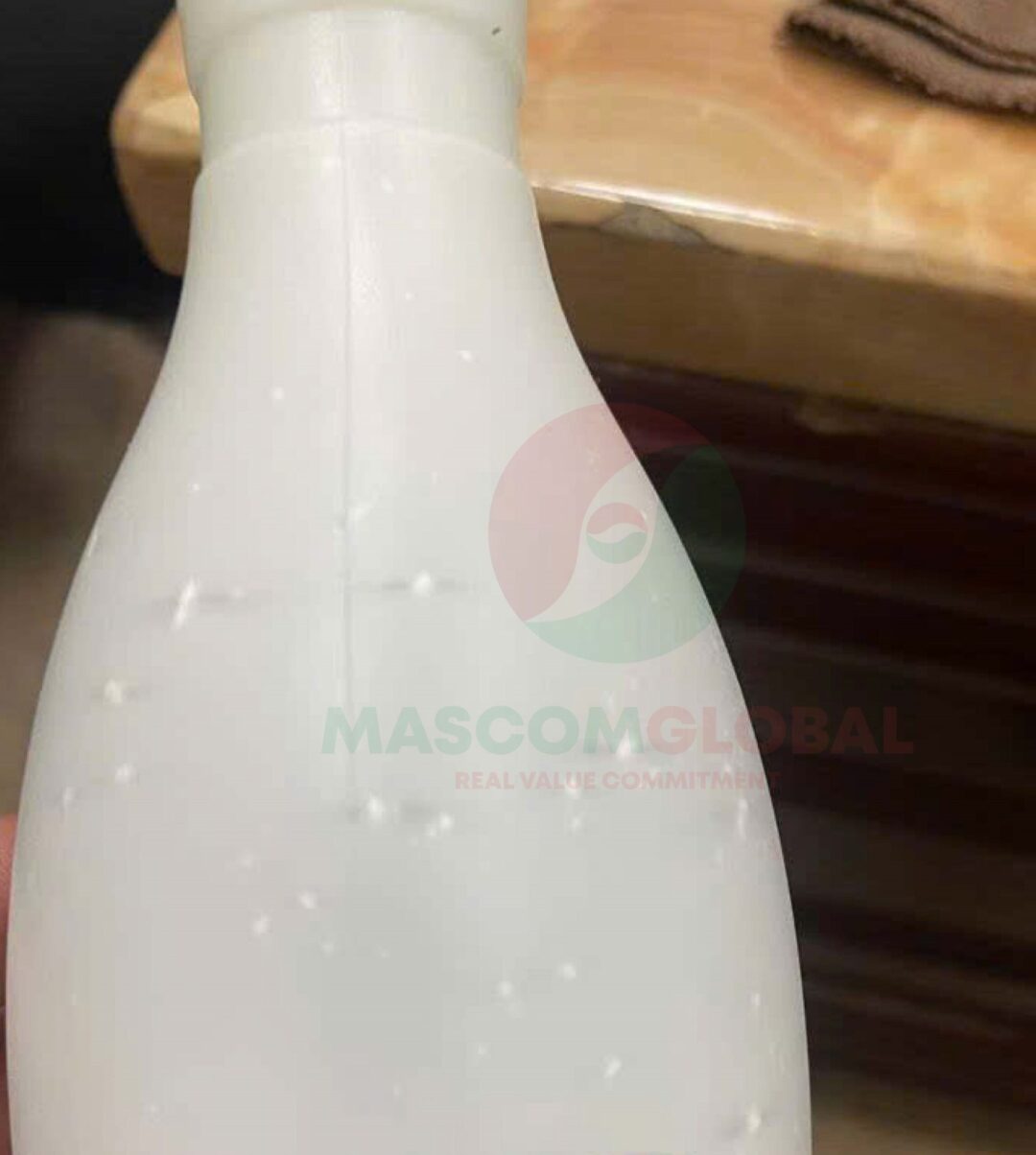
1. White Spots and Rough Film Surface
Causes:
- Poor dispersion of the filler due to low-quality production or incompatible processing equipment.
- Filler resin base not matching the main polymer used in the final film.
- Product deterioration caused by long storage time or improper handling conditions.
Solutions:
To eliminate this issue, manufacturers should choose a filler grade with a high level of dispersion and better resin compatibility.
If the film blowing machine is not suitable, the material can be used for alternative applications such as extrusion or injection molding, and a new filler grade optimized for film blowing should be recommended.
Adjusting the extruder temperature profile may also help improve dispersion and surface smoothness.
In cases where the filler has been stored for a long time, it is advisable to reduce the filler ratio or use it for less demanding products to avoid surface roughness.
2. “Fish Eyes” or Bubbles on the Film Surface
Causes:
- Excessive moisture in filler or recycled resin.
Solutions:
This problem can be solved by pre-drying the filler before feeding it into the extruder or by adding a moisture-absorbing additive to the compound.
If the issue persists or the customer targets high-end applications, Mascom recommends using a premium filler grade with a very low moisture level and improved dispersion quality.
Proper control of storage humidity and raw material handling is also crucial to prevent this recurring issue.
3. Poor Film Gloss
Causes:
- Inappropriate calcium carbonate particle size or surface coating.
- Non-optimized formulation leading to poor surface finish.
Solutions:
To enhance film gloss, manufacturers should select filler grades with smaller CaCO₃ particle sizes and optimized coating treatment.
Alternatively, adding a small percentage of LDPE can help improve surface smoothness and light reflection.
Mascom’s technical team can also assist in adjusting the compound formula to achieve the desired gloss level without compromising mechanical strength.
4. Unstable Bubble or Film Vibration During Blowing
Causes:
- The melt flow index (MFI) of the filler masterbatch does not match the resin matrix.
- Inconsistent or unstable air flow during the blowing process.
Solutions:
An unstable bubble can be corrected by adjusting the extrusion temperature and air pressure settings to ensure steady melt viscosity.
In the long term, customers should consider using a filler grade with a compatible MFI, which ensures smooth extrusion and uniform bubble formation.
Regular maintenance and calibration of the film blowing equipment are also recommended for optimal stability.
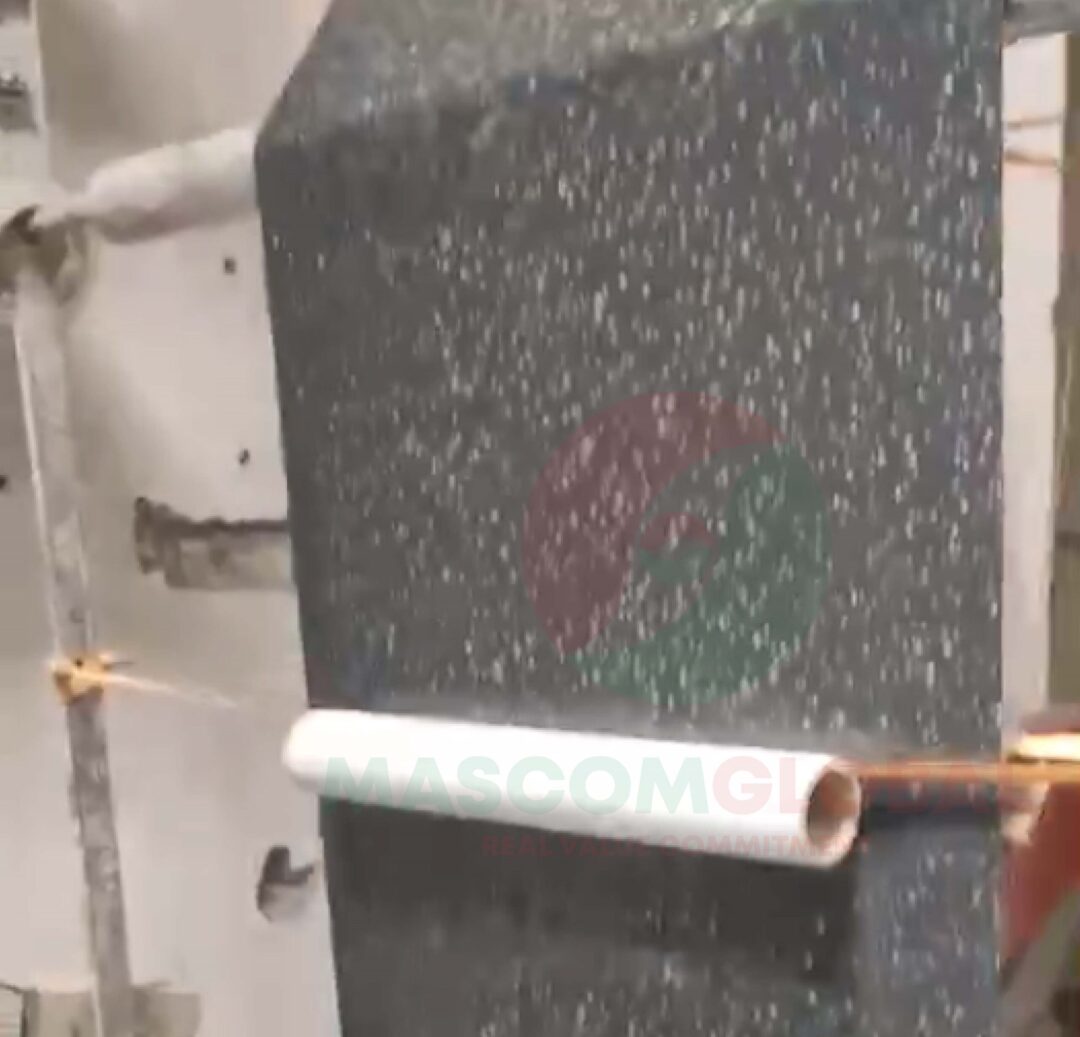
5. Low Film Strength or Poor Elongation
Causes:
- Incompatible filler resin or excessive filler loading.
- Customer’s formulation not optimized for performance.
- Improper air flow or cooling speed in the film blowing process.
Solutions:
Mascom suggests modifying the filler formula to ensure better bonding between the filler and the polymer matrix.
Customers should optimize the compound ratio between filler and virgin resin to maintain the right balance between stiffness and flexibility.
Additionally, adjusting the film blowing parameters (such as blow-up ratio, air pressure, and cooling temperature) can significantly enhance tensile strength and elongation.
6. Film Breakage During Production
Causes:
- Poor filler dispersion or contamination in the mixture.
- Inappropriate particle size of CaCO₃.
- Blocked filter screens reducing material flow.
Solutions:
To prevent film breakage, manufacturers should use filler with high dispersion quality and clean raw materials free from impurities.
Regular inspection and replacement of filter meshes are necessary to maintain smooth extrusion.
Mascom also recommends optimizing the filler particle size to ensure consistent melt flow and eliminate stress points that lead to film tearing.
7. Film Too White or Too Dark
Causes:
- Excessive whiteness caused by high TiO₂ content or ultra-white calcium carbonate.
- Low-quality filler resulting in a dull or grayish tone.
- Incompatible resin base leading to poor color consistency.
Solutions:
To correct film color imbalance, select a filler grade with appropriate whiteness and controlled TiO₂ content.
For overly white films, switching to a filler with lower brightness or reduced TiO₂ level can restore the desired shade.
For darker or dull films, adding OB-1 or high-quality TiO₂ pigment is recommended to improve brightness and transparency.
In all cases, matching the filler resin with the main polymer is essential for stable optical performance.
Why Choose Mascom Global JSC as Your Filler Masterbatch Partner?
Mascom Global JSC not only delivers consistent quality and competitive pricing, but also provides comprehensive technical support throughout the production process.
With a skilled R&D team, advanced quality control system (DSC, TGA, MFI, Spectrophotometer), and flexible custom production, Mascom ensures the most efficient and reliable filler solutions for every film blowing application.
