Blog
Manufacturing Plastic Bags: From Raw Materials to Finished Products
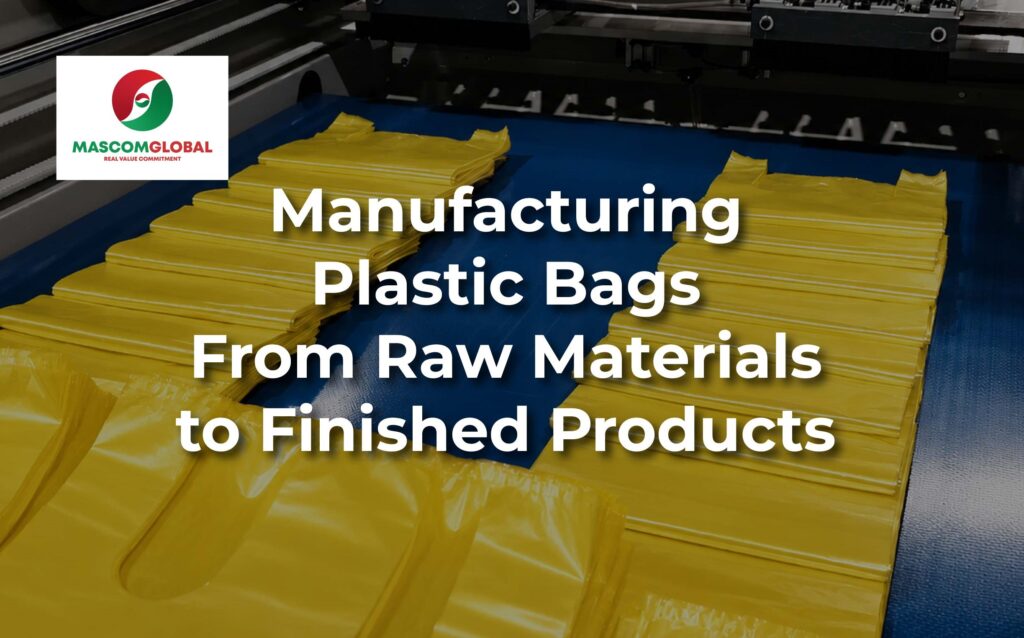
[Mascom Global] In the modern industrial era, manufacturing plastic bags have become an indispensable part of commodity circulation and daily life. However, few people understand that behind a thin bag lies a complex technical process and meticulous chemical calculations. This article will dive deep into the world of the manufacturing plastic bags industry to explore the types of materials and the operation of a modern factory today.
-
Primary Raw Materials in Manufacturing Plastic Bags Production
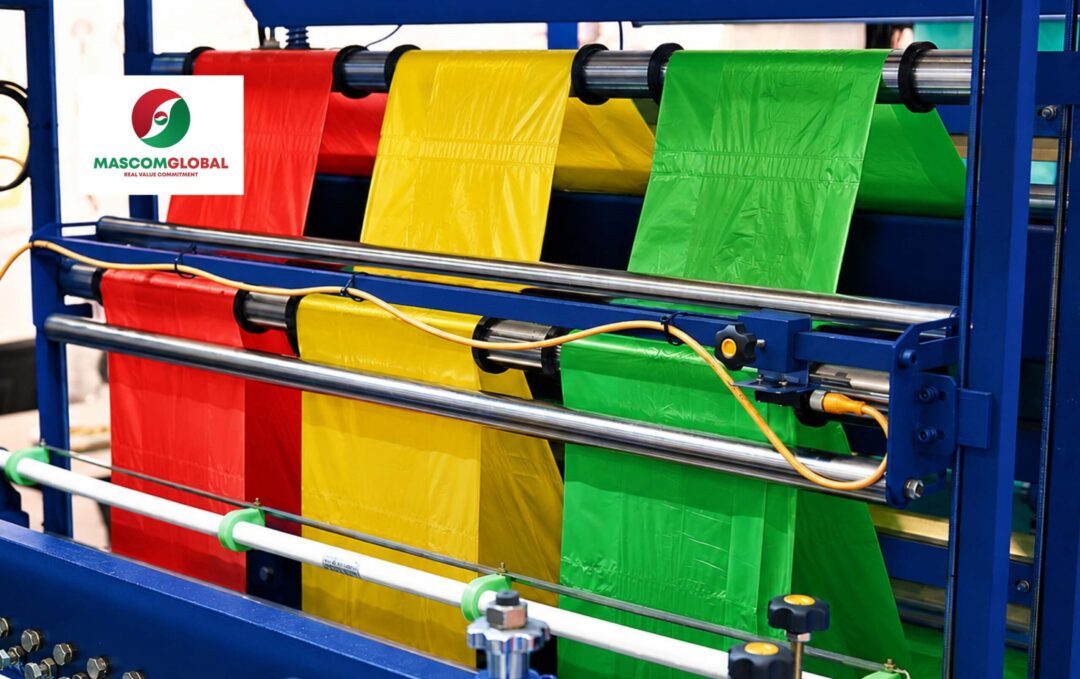
(Illustrative purpose only)
Materials are the decisive factor in the durability, transparency, and load-bearing capacity of a bag. When manufacturing plastic bags products, thermoplastic beads are commonly used today.
Polyethylene (PE) Resin
This is the most common material, including two main variants:
- HDPE (High-Density Polyethylene): Has a high molecular density, creating a stiff, less stretchable bag. It is commonly found in supermarket bags or food bags. When lightly crumpled, HDPE bags produce a characteristic crackling sound.
- LDPE (Low-Density Polyethylene): Has a lower molecular density, giving the bag high transparency, a smooth surface, and better elasticity. LDPE is often used for clothing bags, cosmetics, or premium packaging.
Polypropylene (PP) Resin
PP bags are stiffer than PE and have excellent resistance to gas and water vapor. They are commonly used in packaging dry foods or products that need to maintain a fixed shape.
Essential Additives
In manufacturing plastic bags production, specific substances are often added to optimize performance:
- Masterbatch (Colorant): Helps create a variety of colors for the bags.
- UV Blocking Agents: Protect the goods inside from degradation caused by sunlight.
- Biodegradable Additives: Help plastic bags decompose in the environment after a certain period (usually corn starch or organic compounds).
- Anti-Static Additives: Used for electronic component packaging to prevent static discharge.
-
Detailed Manufacturing Plastic Bags Process
This manufacturing plastic bags operation is typically carried out through four main stages, requiring seamless coordination between machinery and temperature control systems.
Stage 1: Preparation and Mixing
Virgin plastic resins are mixed with color masterbatches and additives in a specific ratio. This ratio is carefully calculated based on the thickness and technical requirements of the order. Modern factories use automatic dosing systems to ensure 100% consistency across batches.
Stage 2: Extrusion & Blown Film
This is the most critical stage of manufacturing plastic bags operation, determining the basic shape and quality of the film:
- Melting: The plastic mixture is fed into a hopper and moved to the extruder. Here, the plastic is heated and melted at temperatures ranging from 180°C to 230°C.
- Extrusion: The molten plastic is forced through a circular die to form a thin plastic tube.
- Blowing: A stream of air is blown into the center of the tube, inflating it like a long balloon (called a “plastic bubble”). Adjusting the air volume determines the width and thickness (microns) of the plastic film.
- Cooling: A cooling ring blows cold air around the bubble to immediately solidify the plastic film.
Stage 3: Winding
After cooling, the plastic bubble passes through a series of rollers that flatten it into a double-layered film. It is then wound into large film rolls. At this step, if the bag requires printing, the film surface undergoes a Corona Treatment. This process uses high-voltage discharge to increase the surface tension, allowing printing ink to adhere firmly.
Stage 4: Printing & Finishing (Cutting)
- Printing: The film rolls are moved to a printing machine (usually Flexographic or Rotogravure) to print logos and brand information.
- Bag Cutting and Sealing: An automatic machine measures the dimensions and cuts individual bags from the roll. Simultaneously, a heat-sealing bar seals the bottom of the bag.
- Handle Punching: For “T-shirt bags” (supermarket bags), a hydraulic press punches out the handles at the end of the line.
-
Technical Factors Influencing Quality of Manufacturing Plastic Bags Process
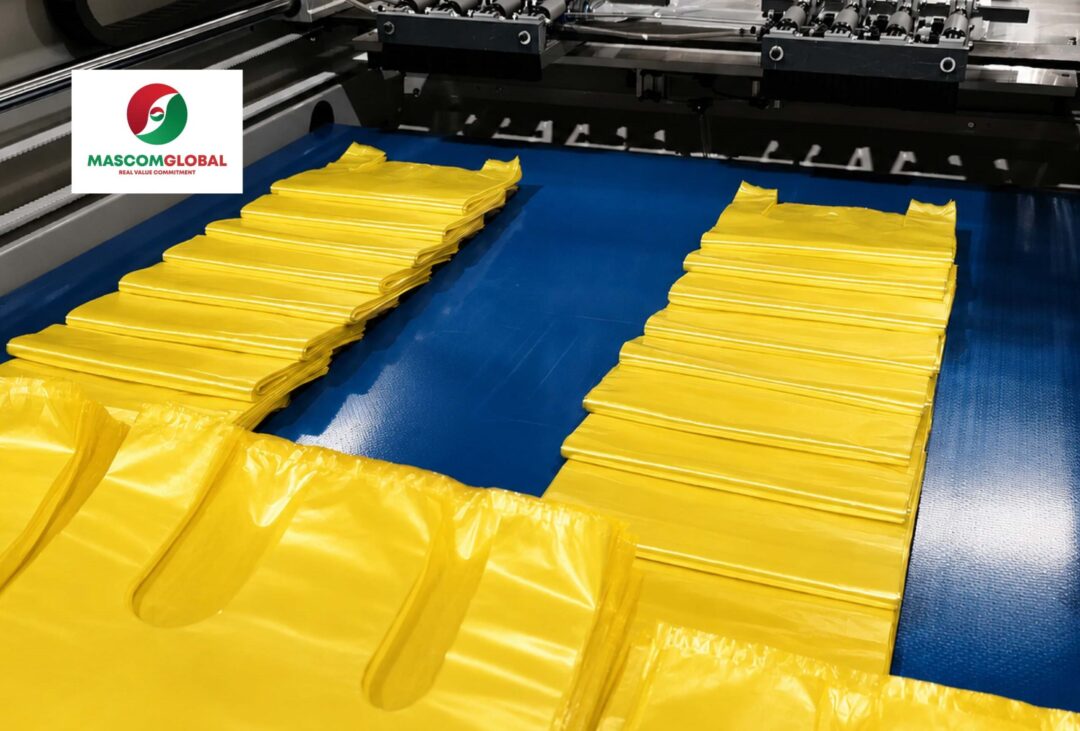
(Illustrative purpose only)
To produce a standard-compliant product, the factory must strictly control the following parameters:
- Melting Temperature: If the temperature is too high, the plastic degrades and loses strength. If it is too low, the plastic does not melt completely, causing “fish eyes” (lumps) on the surface.
- Air Blow Speed: Determines the uniformity of thickness. Uneven thickness makes the bag prone to tearing at thin spots.
- Screw Pressure: Ensures that the plastic is pushed out continuously and stably.
-
Deep Dive: Machinery in the Production Line
To operate the above process, a modern factory needs synchronized machinery:
Blown Film Machine (The Heart)
- The Screw: Responsible for mixing and pushing the plastic. High-quality screws ensure the molten mixture is air-bubble-free.
- The Die Head: Determines the bag’s width range. Professional factories often have various die heads to serve different sizes, from small medicine bags to large industrial liners.
Printing Technology
- Flexo Printing: Best for large orders with simple designs. It is cost-effective and fast.
- Rotogravure Printing: For high-end bags requiring sharp images and absolute color precision. This is the top choice for major food brands.
-
Quality Control Standards (QC)
A reputable manufacturer must apply rigorous testing:
- Tensile Strength Test: Measures the maximum force a bag can withstand before breaking.
- Seal Strength: Ensures the bottom seal does not burst under heavy loads.
- Food Grade Certification: For food packaging, raw materials must meet FDA or equivalent standards to ensure no toxic chemicals leach into the food.
-
Sustainable Trends and Biodegradable Bags
In the context of climate change, the industry is shifting toward eco-friendly solutions:
- Recycled Plastic Bags (PCR): Utilizing Post-Consumer Recycled resin to reduce ocean waste.
- Compostable Bags: Using plant-based materials like PLA (Polylactic Acid). These bags can fully decompose into water, CO2, and biomass within 6-12 months in composting conditions.
Conclusion
In summary, the manufacturing plastic bags process is a closed supply chain, from resin selection and additive blending to advanced extrusion and printing techniques. With technological advancements, plastic bags today are not just containers; they are powerful branding tools that are becoming increasingly eco-friendly through innovations in bio-materials.
If you are looking for efficient packaging solutions or want to build a modern manufacturing plastic bags production line, always prioritize energy-saving technologies and sustainable materials to protect a green future.
