Blog
Essential Certifications and Compliance Requirements for Plastic Products Manufactured for Food Contact
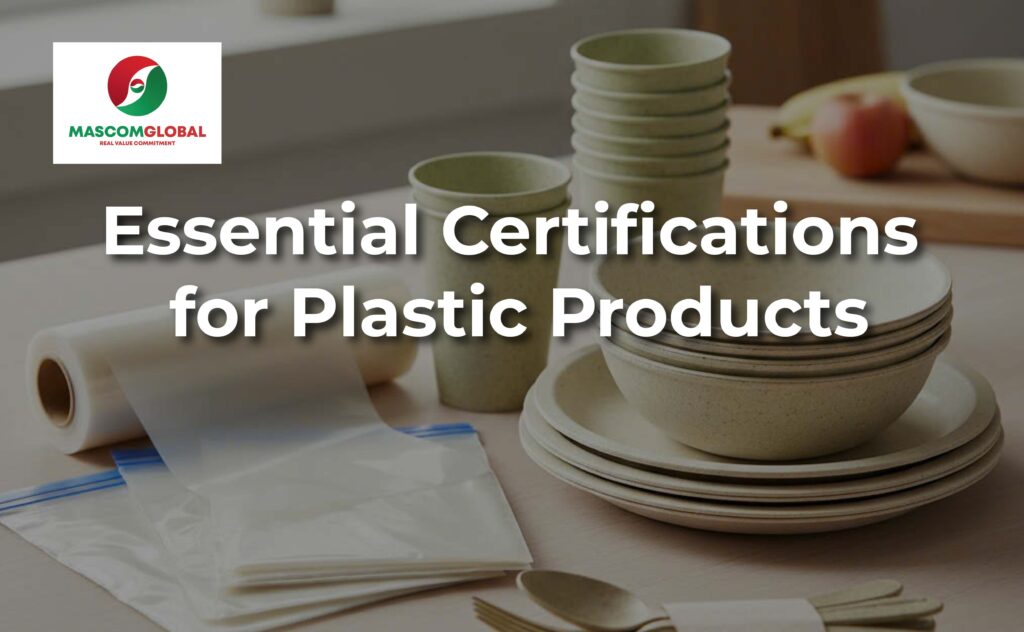
In today’s global marketplace, food safety is a top priority for consumers, regulators, and manufacturers alike. Plastic products designed for food contact — such as containers, packaging films, bottles, utensils, and kitchenware — must undergo strict assessments to ensure they do not pose health risks. To guarantee compliance, businesses must obtain a series of certifications and follow regulatory standards that verify the product’s safety, quality, and suitability for food use. Below are some of the most important certifications and testing requirements for plastic products intended for food contact applications.
1. FDA Compliance (U.S. Market)
For companies exporting to or operating within the United States, the U.S. Food and Drug Administration (FDA) plays a central role in regulating food contact materials. Plastics must comply with FDA 21 CFR regulations, which outline the types of polymers, additives, stabilizers, and processing aids that are permitted for contact with food.
FDA compliance does not require a physical certificate issued by the government; instead, manufacturers must perform appropriate testing and maintain documentation demonstrating that the materials meet FDA requirements. This ensures that no harmful substances migrate into food and that the product is safe under normal conditions of use.
2. EU Regulation (Europe Market): EC No. 1935/2004 & EU 10/2011
Europe enforces some of the strictest regulations for food contact materials. Two key frameworks include:
- Regulation (EC) No. 1935/2004 – This sets general safety requirements for all food contact materials, ensuring that products do not transfer substances that could endanger health, change food composition, or alter its sensory properties.
- EU Regulation 10/2011 – This is specific to plastics and establishes the Union List, which identifies substances allowed in the manufacturing of plastic food-contact materials. It requires migration testing, including overall migration limits (OML) and specific migration limits (SML) for certain substances.
Manufacturers must also provide a Declaration of Compliance (DoC), summarizing test results and confirming conformity with applicable EU laws.
3. LFGB Certification (German Standard)
Germany’s LFGB (Lebensmittel-, Bedarfsgegenstände- und Futtermittelgesetzbuch) is widely respected for its rigorous testing standards. Products carrying the LFGB mark or “knife and fork” symbol demonstrate high safety levels and compliance with German laws governing food contact materials.
LFGB testing often includes:
- Sensory testing
- Chemical safety assessments
- Migration tests
- Heavy metal testing
Because of its strictness, LFGB certification is often used as a selling point for brands wanting to position their products as safe and premium-quality.
4. ISO Certifications for Quality and Safety Management
Although ISO certifications do not directly approve food contact materials, they reinforce the manufacturer’s commitment to consistent quality and safety management. Important ISO standards include:
- ISO 9001 – Quality management system
- ISO 22000 – Food safety management (especially relevant for food packaging manufacturers)
- ISO 14001 – Environmental management
Holding these certifications strengthens consumer trust and demonstrates comprehensive control over production processes.
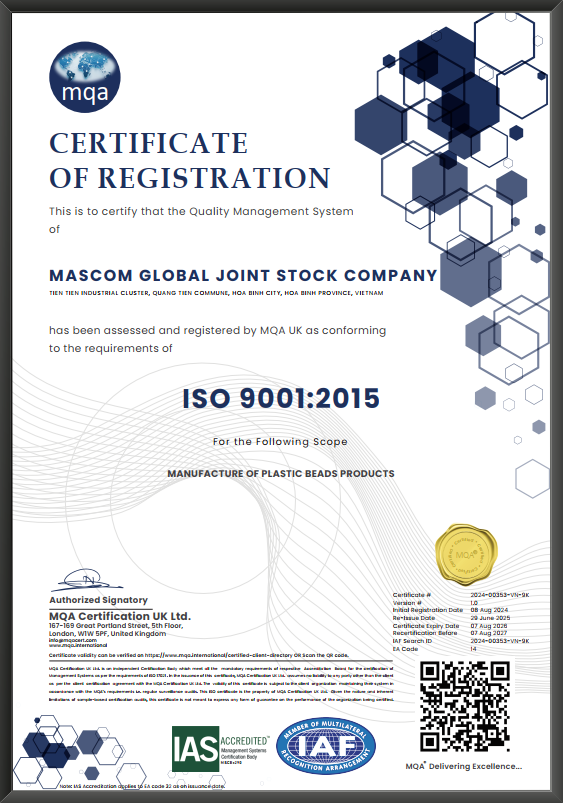
ISO 9001:2015 Certificate – Mascom Global
5. RoHS and REACH Compliance
For manufacturers selling in Europe and other international markets, RoHS and REACH may also apply:
- RoHS (Restriction of Hazardous Substances) ensures that products do not contain unsafe levels of heavy metals such as lead, cadmium, mercury, or chromium VI.
- REACH (Registration, Evaluation, Authorisation, and Restriction of Chemicals) requires manufacturers to identify chemical substances used in production and limit exposure to harmful chemicals.
While these regulations mainly target electronics and industrial materials, many food-grade plastic components, especially multi-purpose plastics, must also comply.
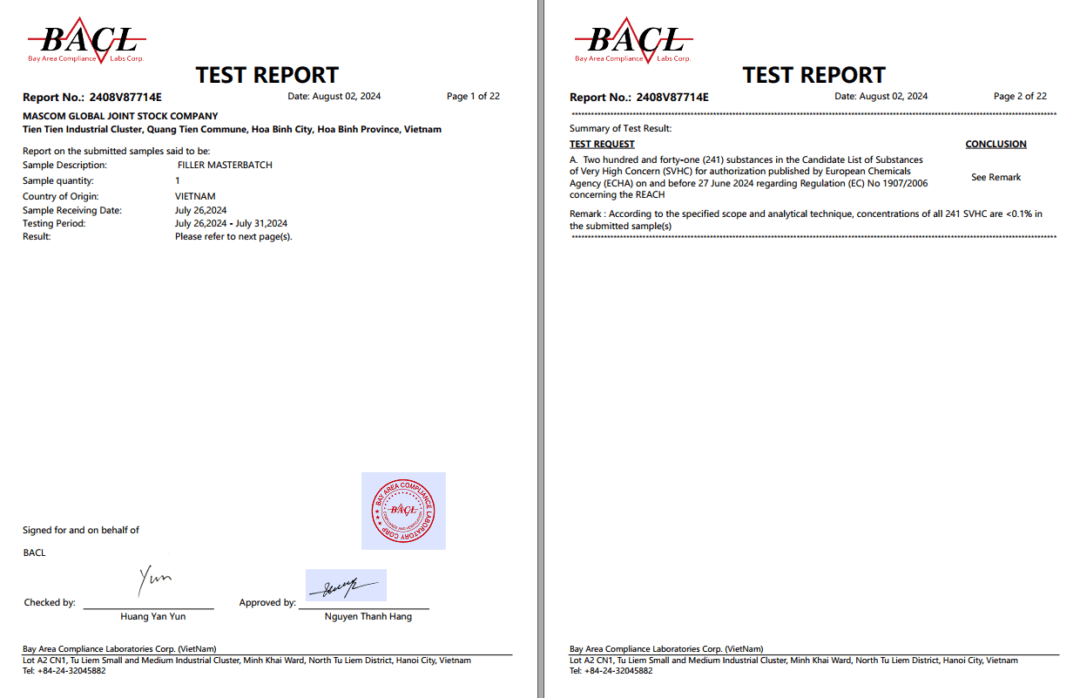
REACH Certificate – Mascom Global
6. SGS, Intertek, and TÜV Testing Reports
In addition to mandatory regulatory compliance, many businesses choose reputable third-party labs such as SGS, Intertek, or TÜV to conduct independent testing. These organizations provide:
- Migration and chemical safety tests
- Heavy metal content assessments
- Temperature resistance testing
- BPA-free or phthalate-free validation
These reports enhance brand credibility and help partners or distributors evaluate product safety more easily.
Conclusion
For plastic products manufactured for food contact, certifications are not only a legal requirement — they are a guarantee of consumer protection and a foundation for building market trust. Whether targeting the U.S., EU, or global markets, complying with FDA regulations, EU standards, LFGB requirements, ISO systems, and additional chemical safety regulations ensures that plastic products meet the highest levels of safety and quality. Investing in proper certification processes ultimately strengthens a brand’s reputation and supports long-term success in the competitive food packaging and kitchenware industry.
