
Blog
Applications of Filler Masterbatch in Nylon Bag Production
In the plastic packaging industry, especially in nylon bag manufacturing, the challenges of cost optimization, quality stability, and market competitiveness are always top priorities for manufacturers. Under increasing competitive pressure, shrinking profit margins, and volatile raw material prices, Filler Masterbatch has become an essential component in the formulation of many nylon bag producers.
Beyond cost reduction, Filler Masterbatch also plays a critical role in improving mechanical properties, stiffness, processing stability, and overall production efficiency when properly selected and applied. This article provides an in-depth analysis of the role, applications, benefits, and technical considerations of using Filler Masterbatch in nylon bag production.
1. Overview of Filler Masterbatch
Filler Masterbatch is a compound material composed of:
- Inorganic fillers (most commonly Calcium Carbonate – CaCO₃)
- Carrier resin (PE, PP, or compatible polymers)
- Surface treatment additives to enhance dispersion and compatibility with the base resin
In nylon bag production (LDPE, LLDPE, HDPE bags), Filler Masterbatch is typically blended with virgin or recycled resin to partially replace the base polymer, reducing material costs while maintaining acceptable performance.
2. What Is a Nylon Bag? Technical Requirements in Production
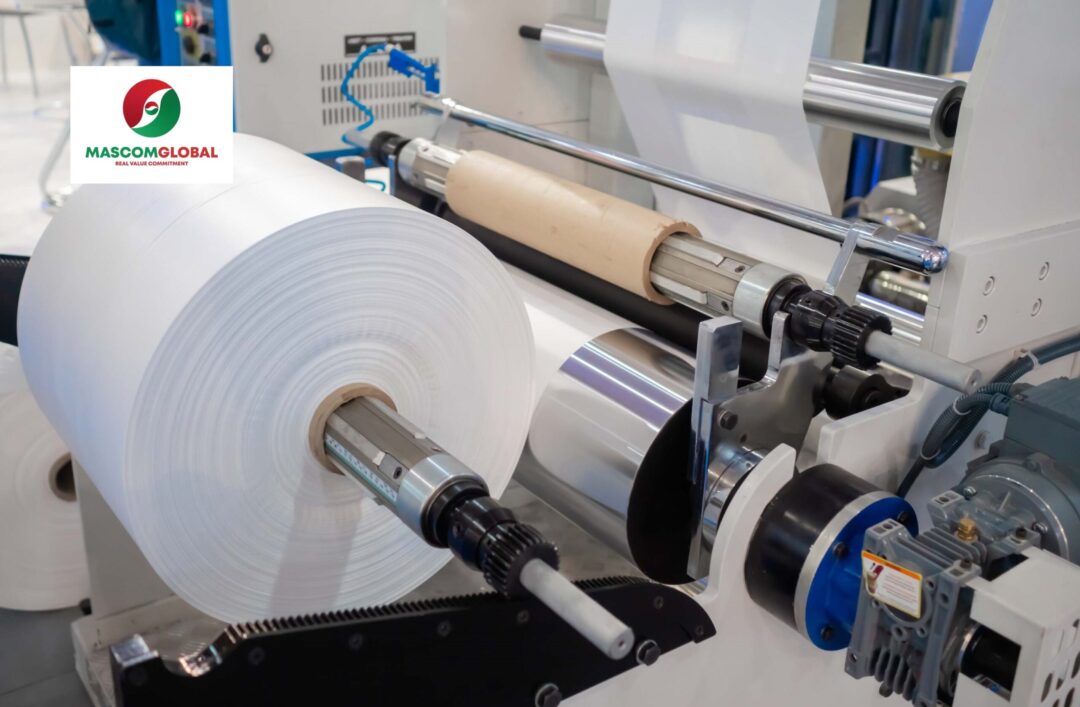
“Nylon bag” is a commonly used term for thin plastic bags made from:
- LDPE / LLDPE: soft, flexible bags with good elongation
- HDPE: stiffer bags with higher load-bearing capacity
Key technical requirements include:
- Adequate tensile and tear strength
- Good flexibility without brittleness
- Smooth surface suitable for printing
- Stable processing on blown film machines
- Competitive production cost
👉 This is why selecting the right type and dosage of Filler Masterbatch is critical; improper use can negatively affect bag quality.
3. The Role of Filler Masterbatch in Nylon Bag Production
3.1. Raw Material Cost Reduction
This is the most significant and immediate benefit.
- Filler Masterbatch is typically 30–50% cheaper than virgin resin
- Can replace 10–40% of virgin polymer in formulations
- Helps manufacturers stabilize product costs, especially during periods of resin price volatility
👉 For mass-market products such as supermarket bags, shopping bags, garbage bags, and industrial packaging bags, Filler Masterbatch is almost indispensable for maintaining profitability.
3.2. Improved Stiffness and Film Stability
The CaCO₃ content in Filler Masterbatch helps:
- Increase film stiffness
- Reduce excessive softness and stickiness
- Improve film roll stability during processing
This is particularly important for:
- HDPE bags
- Bags requiring good shape retention
- Printed bags that demand flat, smooth surfaces
3.3. Enhanced Processing Efficiency and Machine Speed
When high-quality Filler Masterbatch is used:
- Film bubbles become more stable
- Reduced vibration and bubble collapse
- Less uncontrolled shrinkage during processing
➡️ This allows higher extrusion speeds, fewer machine stoppages, and ultimately higher production output.
3.4. Improved Printability
Filler Masterbatch with high whiteness and good dispersion:
- Enhances opacity and coverage
- Improves ink adhesion and color sharpness
- Reduces ink consumption
This is a major advantage for manufacturers producing:
- Logo-printed bags
- Promotional bags
- Export-oriented packaging
4. Specific Applications by Nylon Bag Type
4.1. HDPE Bags (Shopping Bags, T-shirt Bags)
- Typical Filler Masterbatch loading: 20–40%
- Requirements: stiffness, tear resistance, non-brittleness
- Fine CaCO₃ particle size (≤ 2.5 microns) with proper surface treatment is preferred
👉 This segment represents the highest usage of Filler Masterbatch.
4.2. LDPE / LLDPE Bags (Flexible Packaging Bags)
- Typical loading: 5–20%
- Requires careful control to avoid loss of flexibility
- Suitable for garbage bags, food packaging, and general-purpose bags
👉 Often combined with virgin resin + Filler Masterbatch + impact-modifying additives.
4.3. Industrial and Thick Bags
- Goal: reduce cost while maintaining load-bearing performance
- Commonly combined with Filler Masterbatch and recycled resin
- Requires strict control of dispersion and tensile strength
5. Key Considerations When Using Filler Masterbatch
5.1. CaCO₃ Quality
- Finer particle size delivers better performance
- High whiteness and low impurity levels are essential
- Uniform particle distribution is critical
👉 Poor-quality CaCO₃ may cause:
- Brittle films
- Rough surfaces
- Film breakage during extrusion
5.2. Carrier Resin and Surface Treatment
- Carrier resin must be compatible with LDPE/HDPE
- Proper surface treatment (e.g., stearic acid coating) is essential
- Prevents phase separation and white speck formation
5.3. Proper Dosage Control
- Avoid excessively high filler content without thorough testing
- Trial runs are required for each machine and product type
- Every factory has its own optimal formulation
6. Trends in Filler Masterbatch Usage for Nylon Bag Production
- Growing preference for high-quality Filler Masterbatch rather than low-loading solutions
- Increasing combination of Filler Masterbatch with recycled plastics
- Development of environmentally friendly filler solutions
- Compliance with export standards such as REACH, RoHS, and others
Conclusion
Filler Masterbatch is not merely a cost-reduction material, but a critical technical tool that helps nylon bag manufacturers improve processing efficiency, stabilize product quality, and enhance market competitiveness.
To achieve optimal results, manufacturers should:
- Select reliable Filler Masterbatch suppliers
- Strictly control CaCO₃ quality and formulation design
- Conduct thorough production trials for each product line
In an increasingly competitive plastic packaging industry facing cost and environmental pressures, the smart and systematic application of Filler Masterbatch is a key driver for long-term, sustainable growth.
