[MASCOM GLOBAL] For technical directors and production managers in the panel industry, selecting the right flame retardant additive for wood-based panels is a complex balancing act. The ideal additive must provide superior flame suppression without degrading resin cure speed, altering internal bond strength, or causing excessive tool wear during secondary machining.
Understanding Pyrolysis and Flame Retardancy in Lignocellulose Materials
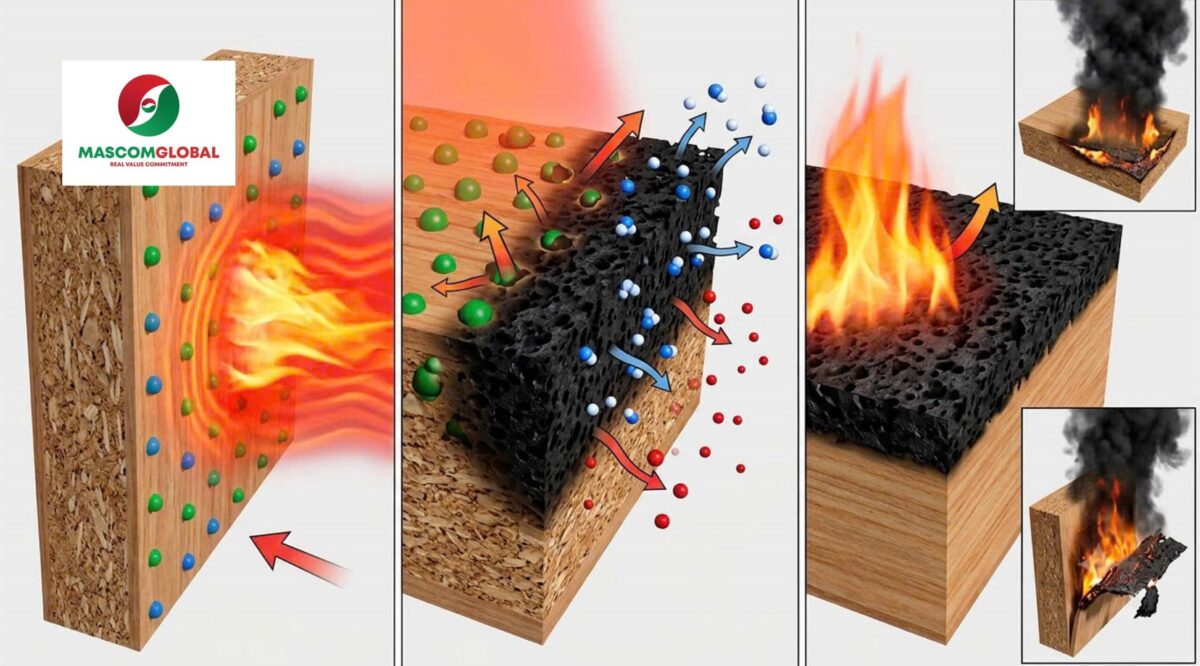
(Illustrative purpose only)
To optimize fire protection in wood-based panels, compounders and resin formulators must understand how wood burns. Thermal degradation of wood occurs through pyrolysis, starting around 200°C to 300°C, where cellulose and hemicellulose break down into volatile flammable gases, tars, and carbonaceous residue.
Flame retardant additive operates through three primary functional mechanisms:
- Condensed-Phase Intumescence (Char Formation): Flame retardant additive promotes the dehydration of cellulose, converting organic material into a non-combustible carbon char barrier. This insulating char layer starves the underlying wood fiber of oxygen and limits thermal transfer.
- Endothermic Cooling: Inorganic additives release chemically bound water vapor when exposed to heat. This reaction cools the combustion zone and dilutes flammable volatile gases.
- Gas-Phase Radical Scavenging: Certain active species capture free hydroxyl and hydrogen radicals in the flame zone, disrupting the autocatalytic combustion reaction.
Core Flame Retardant Chemistries for Wood Panel Manufacturing
Not all fire retardants interact smoothly with wood resin matrices (UF, MUF, PF, or pMDI). Formulators primarily rely on three distinct chemical classes:
- Ammonium Polyphosphate (APP) Systems
Ammonium Polyphosphate is the cornerstone of non-halogenated, intumescent fire retardant technology. During thermal exposure, APP decomposes to release phosphoric acid, which acts as a strong catalyst for char formation on wood fibers.
- Key Advantage: High phosphorus content, exceptional thermal stability, and low smoke density.
- Processing Tip: Choose micro-encapsulated or silane-treated APP grades to minimize water solubility and prevent leaching in humid environments.
- Borate-Based Formulations (Zinc Borate & Disodium Octaborate Tetrahydrate)
Borates function as effective char promoters and endothermic flame retardants. Zinc Borate releases structural water at temperatures above 290°C while forming a protective vitreous glass layer over the wood particles.
- Key Advantage: Dual protection - borates offer both fire retardancy and built-in fungicidal resistance against termites and wood decay fungi.
- Processing Tip: Often used in synergy with APP or aluminum trihydrate (ATH) to reduce overall chemical loading.
- Nitrogen-Phosphorus Synergistic Additives (Melamine Polyphosphate)
Melamine Polyphosphate (MPP) combines gas-phase flame inhibition with condensed-phase char formation. When heated, melamine acts as a blowing agent, expanding the carbon char layer into a thick, porous insulating foam.
- Key Advantage: Excellent thermal endurance during high-temperature hot-pressing processes.
Critical Technical Selection Criteria for Panel Producers
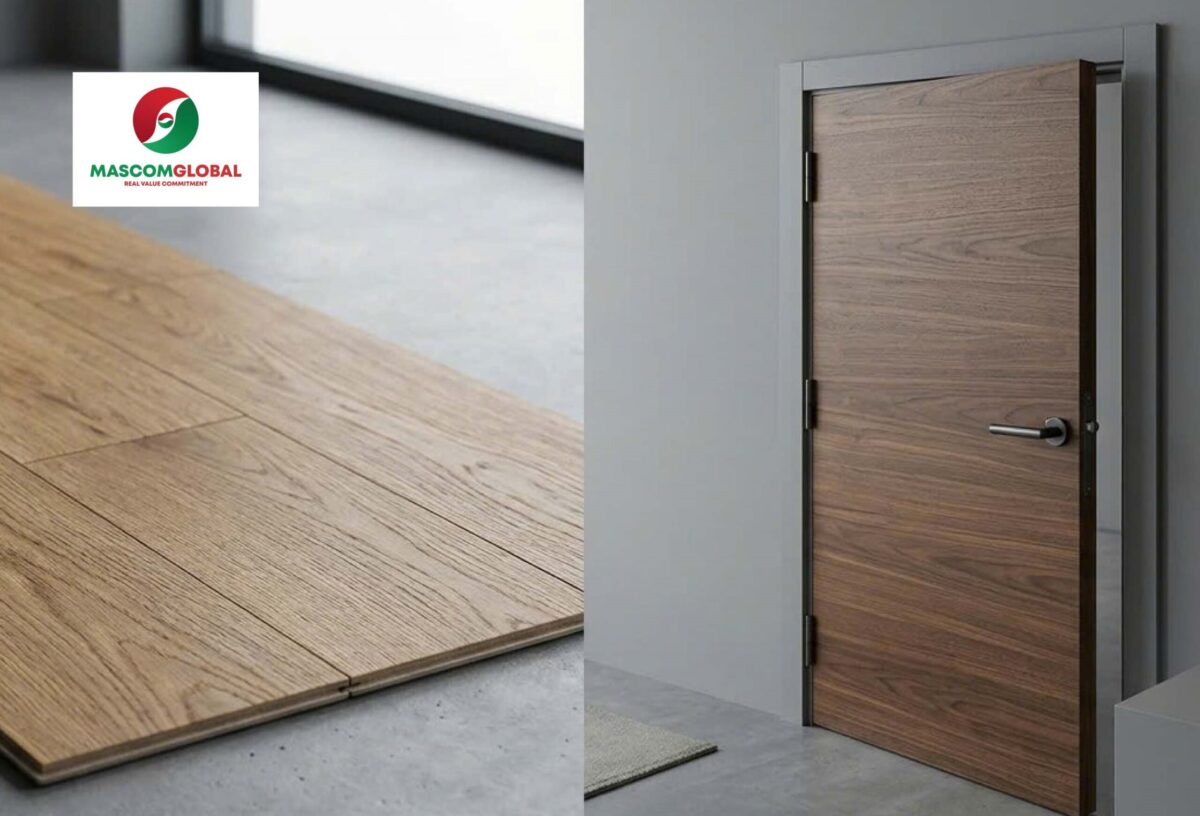
(Illustrative purpose only)
Adding flame retardant additive directly to resin systems or wood fibers can alter manufacturing chemistry. Technical procurement teams must evaluate suppliers based on four key operational metrics:
A. Compatibility with Resin Curing Chemistry
Acidic or alkaline additives can alter the pH of Urea-Formaldehyde (UF) or Melamine-Urea-Formaldehyde (MUF) adhesives, causing premature gelation or delayed resin curing. The best flame retardant additive features buffered pH profiles or specialized surface coatings to preserve adhesive kinetics.
B. Hygroscopicity and Dimensional Stability
Certain water-soluble salts absorb ambient moisture, causing swelling, efflorescence (white salt deposits on panel surfaces), or adhesive failure over time. Non-hygroscopic, insoluble additive formulations are mandatory for Class 2 and Class 3 moisture-resistant panels.
C. Machining Tool Wear and Mechanical Integrity
High loadings of abrasive inorganic powders can dull CNC router bits, saw blades, and sanding belts rapidly. Premium micro-fine additive grades disperse evenly within the fiber matrix, preserving internal bond (IB) strength and modulus of rupture (MOR) while reducing mechanical abrasion.
D. Low Emissivity and Eco-Friendliness
Modern architectural standards prioritize indoor air quality (IAQ). Flame retardant systems must remain halogen-free, non-toxic, and fully compliant with REACH, RoHS, and low-formaldehyde emission standards (CARB Phase 2 / EPA TSCA Title VI).d
Strategic Conclusion: Elevating Panel Value Through Advanced Flame Retardant Additive Technology
Transitioning to high-performance, eco-friendly flame retardant additive is no longer just a compliance requirement - it is a strategic opportunity to enter high-margin commercial and public infrastructure markets. By selecting halogen-free, low-hygroscopic phosphorus-nitrogen additive packages, wood panel manufacturers can deliver certified fire resistance without compromising structural performance or processing efficiency.