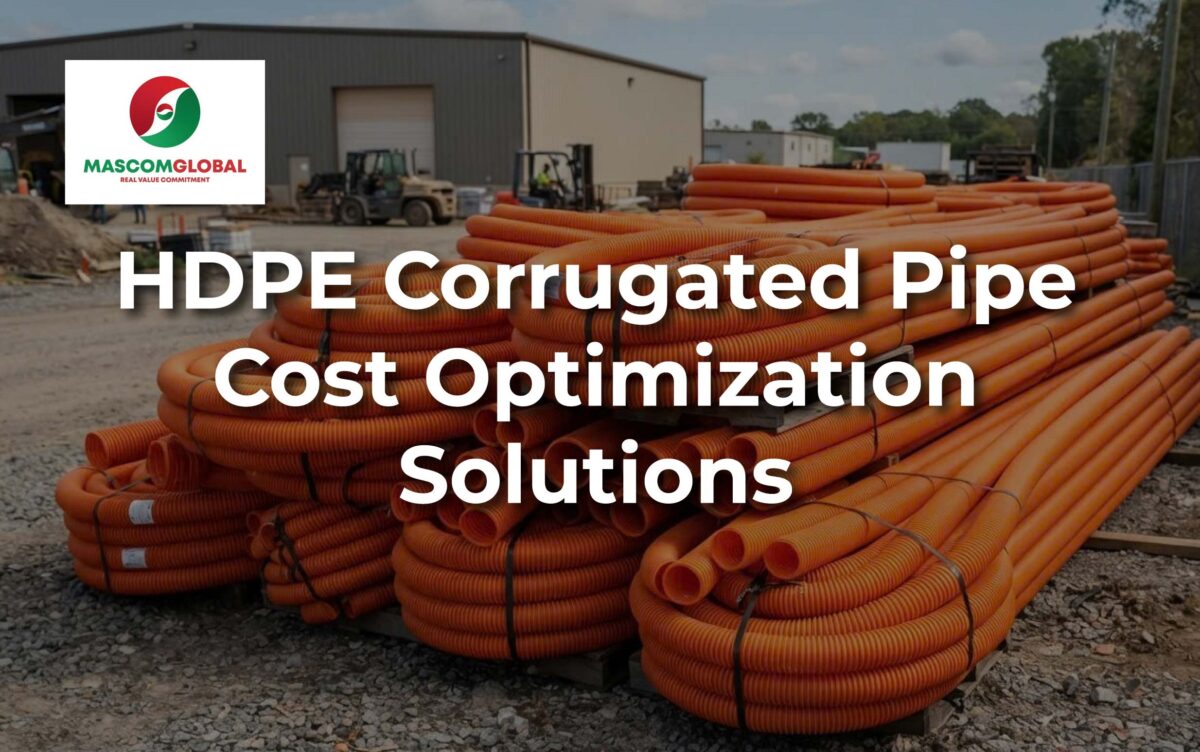
HDPE corrugated pipes are widely used in drainage systems, stormwater management, urban infrastructure, and various engineering projects. Product quality depends on raw material selection, pipe structure design, and control of the extrusion and forming process. Therefore, cost optimization is not simply about purchasing cheaper materials. The real objective is to reduce the cost per meter of compliant pipe while maintaining ring stiffness, impact resistance, joint integrity, and long-term performance.
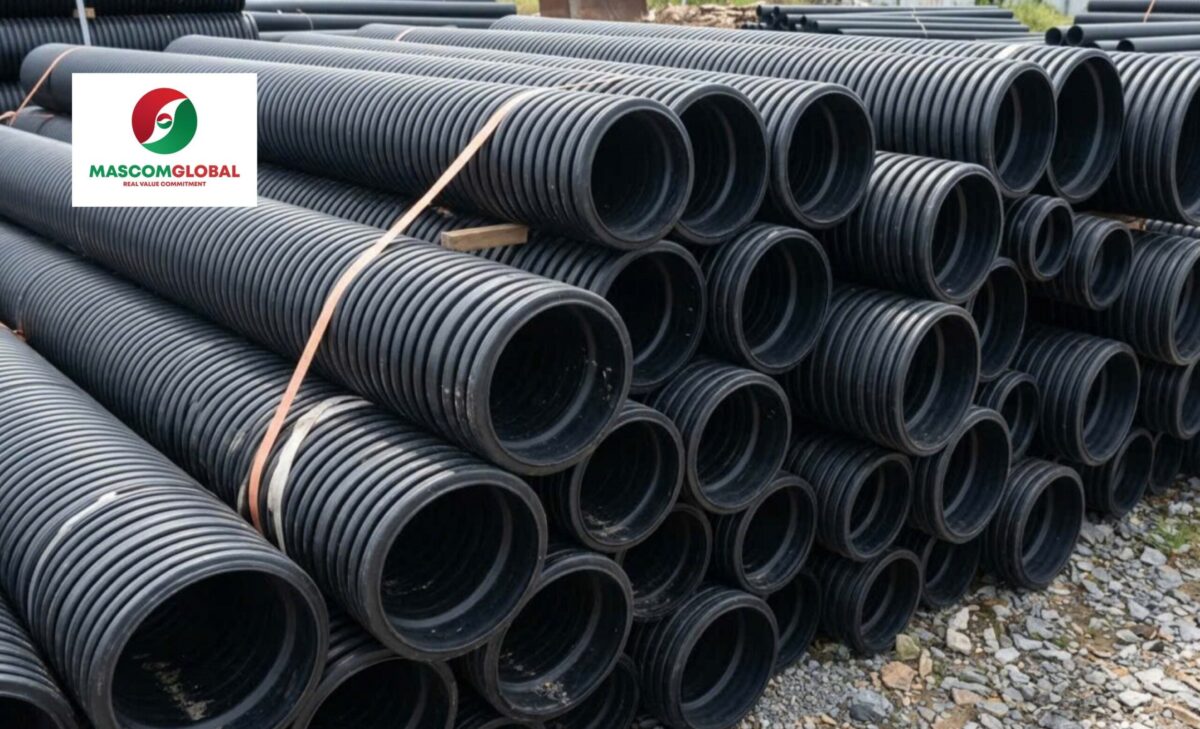
(Illustrative purpose only)
1. HDPE RESIN - THE PRIMARY RAW MATERIAL
HDPE is the main polymer responsible for the pipe structure and mechanical properties. When selecting a resin grade, manufacturers should consider density, melt flow rate (MFR), tensile strength, environmental stress crack resistance, and processing stability.
The selected HDPE grade must match the pipe diameter, single-wall or double-wall structure, ring stiffness class, and applicable product standards. Choosing resin based on price per kilogram alone can be misleading. A lower-cost grade that causes extrusion instability, higher scrap rates, or inconsistent product quality may increase the overall manufacturing cost.
2. MASTERBATCH AND ADDITIVES FOR HDPE CORRUGATED PIPE PROTECTION
Black Masterbatch is commonly used to provide black coloration and can help protect HDPE against UV exposure when the carbon black content, dispersion, and formulation meet the application requirements. Manufacturers should evaluate the carrier resin, pigment content, dispersion quality, and compatibility with the base polymer.
Antioxidants can help reduce polymer degradation caused by heat and oxidation during processing. Depending on the formulation and production line, manufacturers may also consider suitable processing additives. Product selection should be based on the Technical Data Sheet (TDS), applicable standards, and practical production trials. Increasing additive dosage without technical evaluation does not necessarily improve performance.
3. FILLER MASTERBATCH: CONTROLLED COST OPTIMIZATION IN HDPE CORRUGATED PIPE
Some HDPE corrugated pipe formulations use mineral fillers, such as Calcium Carbonate or Talc, to adjust material costs and selected properties, including stiffness. However, filler cannot directly replace HDPE resin.
Particle size, surface treatment, carrier resin, and dispersion quality all influence the finished product. Excessive loading or poor dispersion may reduce toughness, impact resistance, weld integrity, and forming stability. Filler Masterbatch should therefore be evaluated according to the pipe structure and technical requirements, rather than selected solely by comparing purchase prices per kilogram.
4. OPTIMIZING HDPE CORRUGATED PIPE DESIGN AND PRODUCTION
In double-wall corrugated pipes, the inner wall generally has a smooth surface to support flow, while the outer wall has a corrugated profile to provide structural stiffness. Where the production line allows, manufacturers can evaluate separate formulations for each layer so that materials are selected according to their specific functions.
Controlling temperature, screw speed, feeding, vacuum, cooling, and haul-off speed helps maintain pipe dimensions, corrugation profiles, and wall consistency. Any formulation or processing adjustment should be tested systematically. Changing several parameters at once can make it difficult to identify the cause of variations in product quality.
5. EVALUATING TOTAL HDPE CORRUGATED PIPE MANUFACTURING COST
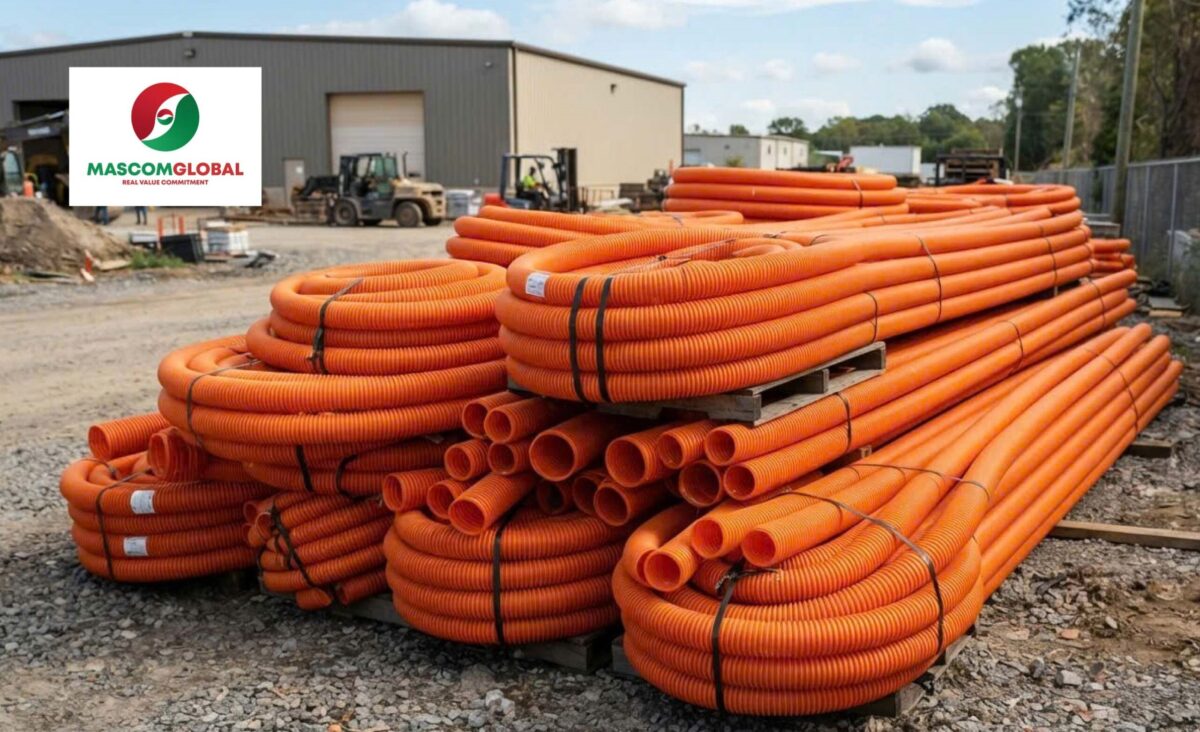
(Illustrative purpose only)
Production efficiency should not be measured by raw material purchase price alone. Manufacturers should monitor material cost per meter of compliant pipe, scrap rate, energy consumption, machine downtime, and reprocessing requirements.
When testing a new resin, filler, or masterbatch, record the formulation, machine settings, and test results. Performance indicators such as ring stiffness, impact resistance, dimensions, and joint integrity must meet the relevant standards and application requirements. Recycled materials should only be considered when feedstock quality is consistent and their use is permitted by the applicable standards or project specifications.
MASCOM GLOBAL - SUPPORTING PIPE MANUFACTURERS
An effective cost optimization strategy comes from the right combination of HDPE resin, masterbatch, additives, pipe structure, and processing conditions. Mascom recommends that manufacturers identify their pipe type, wall structure, applicable standards, production volume, and cost targets before selecting materials.
Exchanging technical information and conducting trials on the actual production line can help identify a solution that balances manufacturing efficiency with reliable product quality.
📩 Contact Mascom Global to discuss your raw material requirements and masterbatch solutions for HDPE corrugated pipe production.