HDPE pipe price is a critical factor determining market competitiveness as High-Density Polyethylene pipes continue to dominate water supply systems, drainage networks, agricultural irrigation, fluid transportation, and industrial infrastructure. Valued for their superior corrosion resistance, durability, flexibility, and long service life, these pipes are the preferred choice for modern construction projects.
However, volatile plastic resin costs, rising energy expenses, and strict technical standards create major margin pressures for producers. Optimizing HDPE pipe price goes far beyond simply sourcing cheaper raw materials; it demands a holistic strategy covering material selection, formulation optimization, extrusion efficiency, and strict quality control. So, how can manufacturers effectively lower production costs while maintaining consistent pipe quality and keeping their HDPE pipe price competitive?
1. Key Factors Affecting HDPE Pipe Price
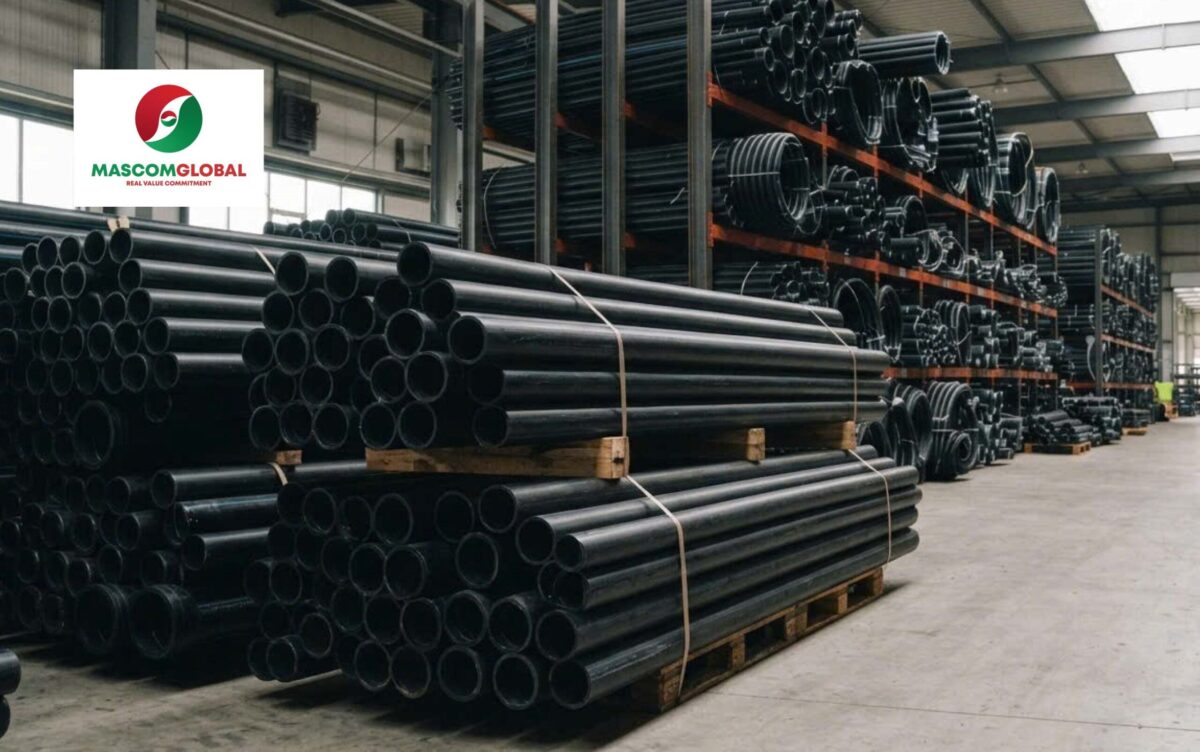
(Illustrative purpose only)
The manufacturing cost of HDPE pipes is influenced by several factors, with raw materials generally accounting for the largest proportion.
1.1. HDPE Resin Price
HDPE Resin is the primary raw material used in HDPE pipe manufacturing. Its price is influenced by crude oil prices, ethylene supply, petrochemical production capacity, and global market demand.
Specialized pipe grades such as PE80 and PE100 are designed to meet specific requirements for pressure resistance and long-term durability. Therefore, selecting the appropriate resin grade according to the intended application and product standards is essential for cost control.
1.2. Pipe Dimensions and Wall Thickness
Pipe diameter, wall thickness, and SDR (Standard Dimension Ratio) directly determine the amount of raw material required.
Pipes with thicker walls generally consume more HDPE resin, resulting in higher material costs per meter. On the other hand, reducing wall thickness without proper technical evaluation may compromise pressure resistance and product service life.
Therefore, optimizing pipe dimensions according to actual application requirements is an important way to control manufacturing costs.
1.3. Additive and Production Costs
In addition to HDPE resin, other materials such as Carbon Black, antioxidants, UV stabilizers, and functional additives also contribute to the overall production cost.
Furthermore, electricity consumption, labor expenses, material waste, production line speed, and defective product rates all influence the final manufacturing cost.
2. Select the Right Raw Materials to Optimize HDPE Pipe Price
One of the most effective ways to optimize HDPE pipe price is to select materials that match the actual performance requirements rather than focusing exclusively on the lowest purchase price.
For pressure-bearing water supply applications, manufacturers must use HDPE resin that meets the required material classification, hydrostatic strength, and applicable product standards. PE100 is commonly used in high-pressure piping systems because of its suitable long-term performance characteristics.
Meanwhile, drainage pipes, cable conduits, and non-pressure fluid transportation systems may have different technical requirements. Selecting the appropriate resin grade helps prevent unnecessary material costs caused by using specifications that exceed actual application needs.
However, any changes in resin grade must be evaluated through appropriate testing and must comply with the technical standards applicable to the finished product.
3. Optimize Formulations and Additive Use to Reduce HDPE Pipe Price
Formulation optimization plays an important role in balancing raw material costs and product performance.
3.1. Control Carbon Black Content
Carbon Black is commonly used in black HDPE pipes to provide color and help protect the material against ultraviolet (UV) radiation.
Selecting a suitable Carbon Black Masterbatch with appropriate pigment content, good dispersion, and compatibility with the HDPE carrier resin helps achieve uniform coloration and minimize dispersion defects while optimizing additive consumption.
For HDPE pipes used outdoors, particularly in water supply and underground infrastructure systems, UV resistance and long-term durability must be controlled according to the relevant technical standards.
3.2. Use Appropriate Functional Additives
Additives such as Antioxidants and UV Stabilizers help protect polymer materials during processing and service.
- Antioxidants: Help minimize thermal and oxidative degradation, supporting the retention of polymer properties.
- UV Stabilizers: Reduce the adverse effects of ultraviolet radiation on materials used in outdoor environments.
- Processing Aids: Can be incorporated into suitable formulations to improve certain processing characteristics.
Selecting additives with appropriate performance helps manufacturers maintain consistent product quality, reduce production defects, and avoid unnecessary material consumption.
3.3. Evaluate Filler Masterbatch Applications Carefully
Filler Masterbatch can help reduce HDPE pipe price in certain HDPE applications that do not require high pressure resistance. However, the incorporation of calcium carbonate (CaCO₃) into pressure-bearing HDPE pipes requires particular caution.
Excessive mineral filler content or poor dispersion can negatively affect tensile strength, elongation at break, impact resistance, and long-term hydrostatic performance.
Therefore, increasing CaCO₃ content should not be considered a universal cost-reduction solution for all HDPE pipes. Manufacturers must evaluate the intended application, applicable standards, and test results before deciding whether filler materials are suitable.
4. Improve Production Line Efficiency to Lower HDPE Pipe Price
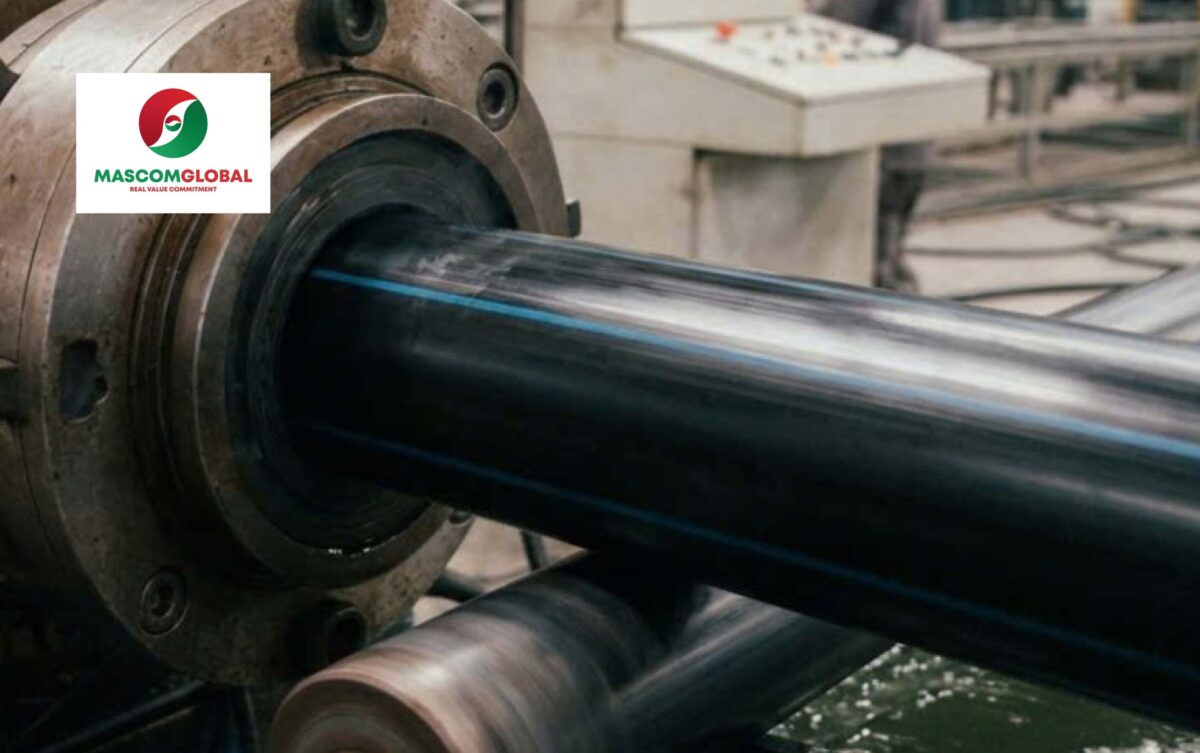
(Illustrative purpose only)
In addition to raw material selection, production efficiency has a significant impact on HDPE pipe manufacturing costs.
Manufacturers can consider the following solutions:
- Control Extrusion Temperature: Maintain suitable temperature profiles to minimize material degradation and ensure consistent melt quality.
- Optimize Screw Speed: Adjust screw speed according to the resin grade and extrusion line configuration to maintain stable output.
- Reduce Product Defects: Control wall thickness, pipe diameter, concentricity, and surface quality to minimize material waste.
Perform Regular Equipment Maintenance: Reduce unexpected downtime and maintain stable production performance.
Optimize Energy Consumption: Use efficient heating, cooling, and motor systems to reduce energy costs.
When production lines operate consistently, manufacturers can lower the manufacturing cost per unit and improve overall competitiveness.
5. Manage Raw Material Supply and Procurement to Stabilize HDPE Pipe Price
HDPE resin prices frequently fluctuate according to developments in the petrochemical market. Therefore, procurement planning and inventory management are also important for HDPE pipe price stabilization.
Manufacturers should develop purchasing strategies based on actual production demand, inventory levels, and market price trends.
Several practical approaches include:
- Cooperating with suppliers that offer stable material availability.
- Negotiating prices based on regular purchasing volumes.
- Evaluating multiple supply sources to reduce dependency risks.
- Inspecting raw material quality before production.
- Maintaining appropriate safety stock to minimize supply disruptions.
In particular, working with suppliers that can maintain consistent quality across different batches helps manufacturers reduce formulation adjustments and avoid unnecessary changes to production parameters.
6. Maintain Quality Control to Prevent Extra Costs on HDPE Pipe Price
Reducing raw material expenses while increasing product defects can ultimately lead to higher overall manufacturing costs.
For HDPE pipes, several key quality parameters require careful monitoring:
- External diameter and wall thickness.
- Dimensional consistency and surface quality.
- Tensile strength and elongation at break.
- Hydrostatic pressure resistance.
- Oxidative stability and weather resistance according to application requirements.
Inspecting incoming materials, monitoring extrusion parameters, and testing finished products help manufacturers identify technical problems at an early stage.
These quality control measures are essential for reducing material waste, minimizing non-conforming products, and maintaining consistent product performance over time.
Material and Additive Solutions from Mascom Global
Optimizing HDPE pipe price requires a comprehensive approach that combines appropriate raw material selection, effective formulation, and production process control.
Mascom Global provides a range of plastic material solutions, including Filler Masterbatch, Color Masterbatch, Additive Masterbatch, and PVC Compound, serving various applications across the plastics industry.
For HDPE pipe manufacturers, our Color Masterbatch and Additive Masterbatch solutions can support requirements related to coloration, dispersion, and functional performance. Filler Masterbatch solutions can also be considered for suitable non-pressure applications after careful evaluation of the required technical properties.
With a focus on practical manufacturing requirements, Mascom Global aims to support customers in optimizing formulations, controlling production costs, and improving manufacturing efficiency.
Choosing the right raw materials not only helps optimize production costs but also provides a foundation for maintaining product quality and building long-term competitiveness in the HDPE pipe market.