Blog
Top Halogen-Free Flame Retardant Suppliers in Europe 2026
What is Halogen-Free Flame Retardant (HFFR)?
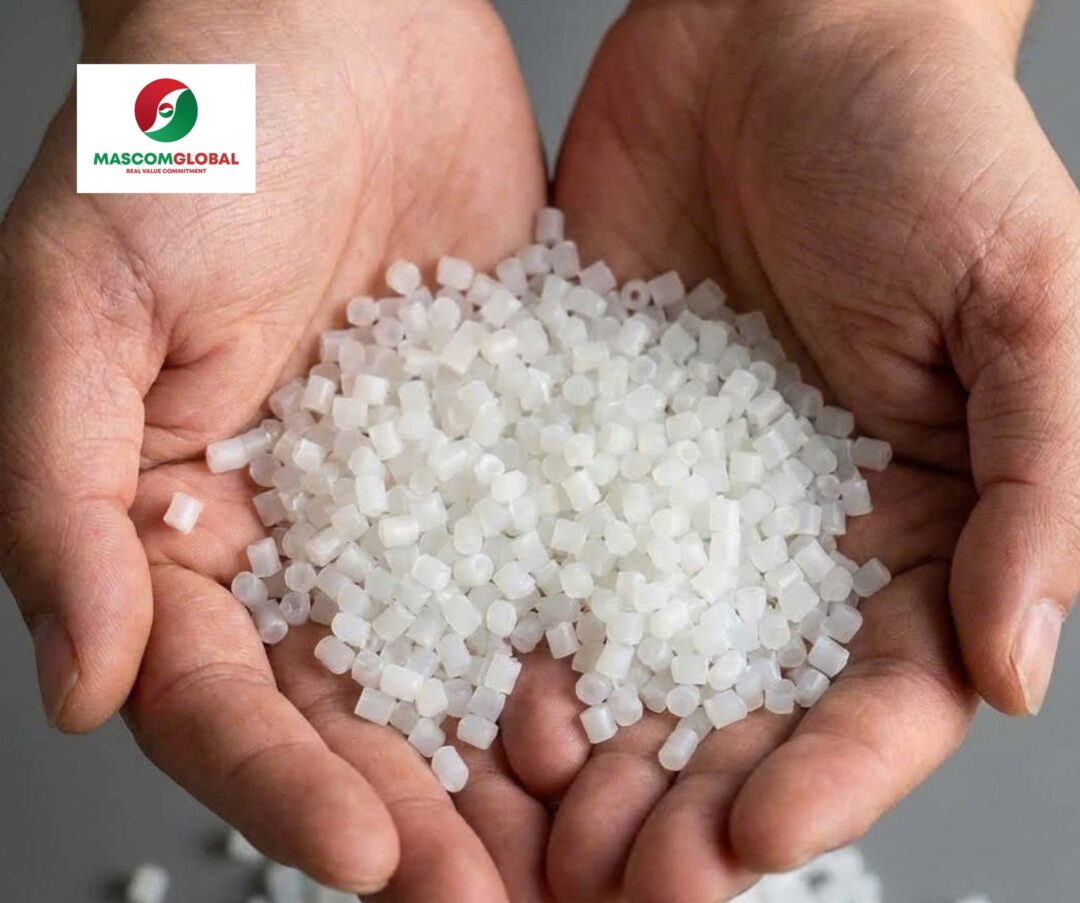
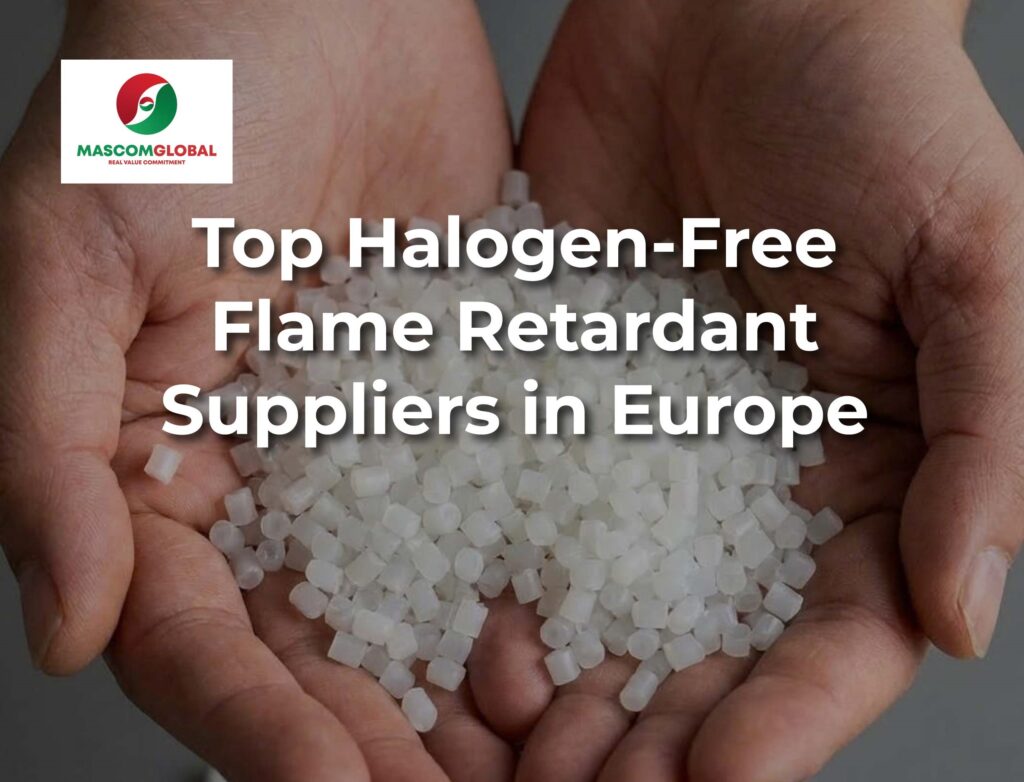
In the plastics, construction, electronics, and automotive industries, Halogen Free Flame Retardants (HFFR) are flame-retardant additives that do not contain halogens such as bromine or chlorine. Traditional halogenated flame retardants can produce toxic smoke and corrosive gases when burning, which are harmful to humans and equipment. HFFR, on the other hand, is typically based on phosphorus compounds, nitrogen compounds, or minerals such as Aluminum Hydroxide (ATH) and Magnesium Hydroxide (MDH). These additives prevent fire propagation, reduce smoke toxicity, and are environmentally friendly, while being recyclable and compliant with standards like RoHS, REACH, and UL94.
Applications of Halogen–Free Flame Retardant
HFFR has become widely adopted due to its ability to improve fire safety while maintaining material performance:
- Engineering plastics & polymers: PVC, polyolefins, ABS, PC/ABS, and other technical plastics.
- Cables & electrical equipment: Wire coatings, circuit boards, and device housings.
- Construction materials & architecture: Fire-resistant panels, composite cladding, insulated pipes.
- Automotive & aerospace: Interior components, protective panels, and high-performance technical parts.
HFFR not only enhances safety but also helps manufacturers meet green material standards increasingly emphasized in the European market.
European HFFR Market & Top Halogen-Free Flame Retardant Suppliers in Europe
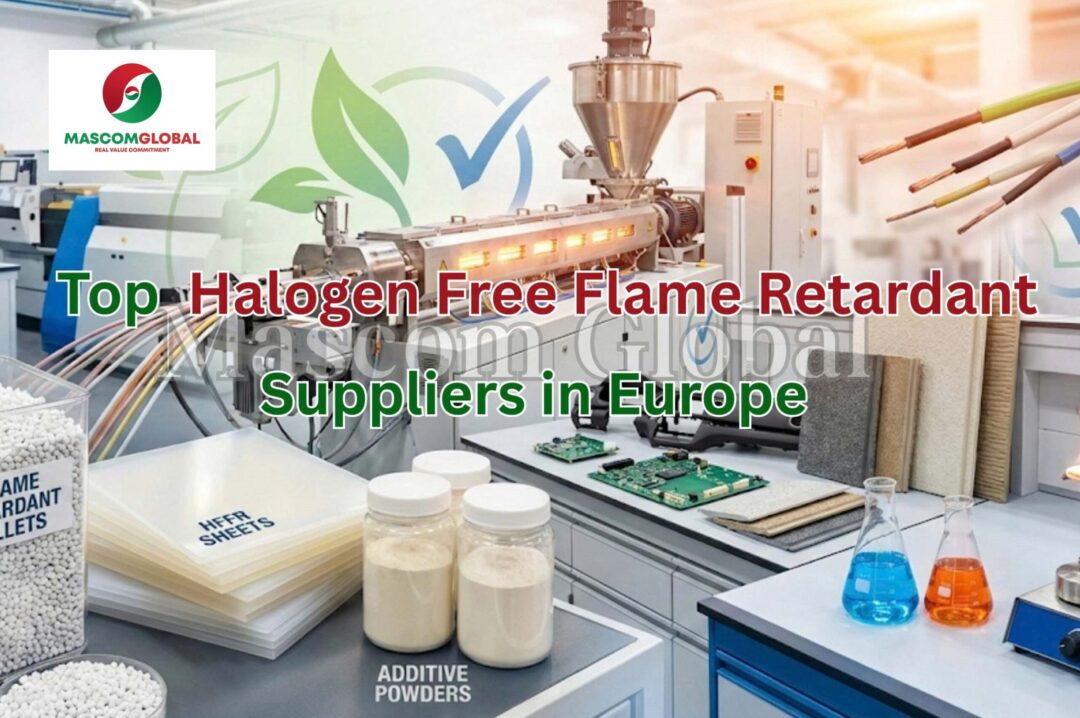
Europe is considered a core market for Halogen-Free Flame Retardants, with an expected growth rate of 5–8% per year, driven by several factors:
- Strict safety and environmental regulations, including RoHS, REACH, and UL94.
- Strong demand from engineering plastics, electronics, green construction, and automotive sectors, where high fire safety standards are mandatory.
- The ongoing trend of replacing traditional halogenated flame retardants with phosphorus, nitrogen, or mineral-based alternatives, reducing toxic smoke and improving safety.
European manufacturers focus on advanced technology, high quality, and technical support services to meet stringent requirements and the growing demand for eco-friendly materials. Within this context, several companies have established themselves as the top suppliers of Halogen-Free Flame Retardants in Europe, offering reliable products that combine performance, safety, and environmental compliance.
-
Clariant AG (Switzerland/Germany)
- Industry: Specialty chemicals & industrial additives
- Main markets: Global, with strong European presence
- Flagship products: Exolit™ – HFFR based on ammonium polyphosphate and phosphinates, applied in engineering plastics, PU foam, fire-resistant coatings, and technical textiles.
-
BASF SE (Germany)
- Industry: Multi-industry chemicals
- Main markets: Global
- Flagship products: Phosphorus-based flame retardants and hydrates such as Aluminum Hydroxide, used in engineering plastics, composites, and protective coatings.
-
LanxessAG (Germany)
- Industry: Specialty chemicals
- Main markets: Europe, North America, Asia
- Flagship products: High-performance phosphinates and ATH masterbatches for automotive, electronics, and construction applications.
-
NabaltecAG (Germany)
- Industry: Additives & material modifiers
- Main markets: Europe, North America, Asia
- Flagship products: Apyral® (ATH) and Apymag® (MDH) – mineral-based flame retardants, eco-friendly and highly effective.
-
BTC Europe (Netherlands)
- Industry: Flame retardants & plastics additives
- Main markets: Europe
- Flagship products: Flamestab®, Melapur® – melamine cyanurate and melamine phosphate for polyolefin and engineering plastics.
-
GulecChemicals (Germany)
- Industry: Flame retardants for materials & technical textiles
- Main markets: Europe & global
- Flagship products: GERPHOS – environmentally friendly HFFR for technical textiles, plastics, and composites.
-
Nordmann (Germany)
- Industry: Chemical distribution & additives
- Main markets: Europe
- Flagship products: Boron- and graphite-based halogen-free flame retardants suitable for plastics, elastomers, and protective coatings.
-
ItalmatchChemicals (Italy)
- Industry: Specialty chemicals
- Main markets: Global, strong presence in Europe
- Flagship products: Masteret®, Melagard®, Phoslite® – phosphorus and nitrogen HFFR for engineering polymers and thermosets.
Mascom Global – Trusted Partner for High-Quality Polymer Solutions in Europe
As global industries increasingly demand sustainable, high-performance materials, Mascom Global from Vietnam has firmly established itself as a leading supplier of masterbatches and additives for the European market. Our extensive product portfolio is designed to meet the diverse needs of polymer manufacturers and industrial clients across multiple sectors.
- Filler Masterbatch: Optimizes mechanical properties, reduces production costs, and enhances durability for various engineering plastics.
- Color Masterbatch: Offers vibrant, consistent, and long-lasting colors suitable for PVC, polyolefins, and other polymer systems.
- Additive Masterbatch: Includes advanced UV stabilizers, antioxidants, and premium halogen-free flame retardants, ensuring safety, regulatory compliance, and environmental sustainability.
What sets Mascom Global apart is our flexibility in customization, strict adherence to European and international quality standards, and competitive pricing, making us a trusted partner for companies seeking reliable, eco-friendly solutions. From small-scale manufacturers to large industrial operations, our products deliver consistent performance, regulatory compliance, and sustainable advantages, enabling clients to maintain a competitive edge in an increasingly demanding market.
With a strong export footprint across Europe and a commitment to innovation, Mascom Global is not just a supplier, but a strategic partner driving growth, safety, and sustainability for polymer and plastics manufacturers worldwide. By choosing Mascom Global, businesses gain access to high-quality masterbatches, technical expertise, and a partner dedicated to meeting the challenges of modern industry.
