
Blog
Popular Color Masterbatches Widely Chosen
[Mascom Global] In today’s highly competitive plastics industry, color masterbatch plays a critical role far beyond simple coloration. It directly impacts product appearance, brand recognition, processing stability, and even production efficiency. Whether used in packaging, films, woven bags, injection-molded goods, or consumer products, color masterbatch has become an essential material for manufacturers seeking consistency, quality, and cost control. With growing demand for visually appealing and high-performance plastic products, certain Color Masterbatches have emerged as the most widely selected across global markets. These popular color masterbatches are favored due to their stable color performance, excellent dispersion, broad application range, and compatibility with modern processing technologies.
White Masterbatch – The Most Widely Used Color Solution
White masterbatch is the most commonly used color masterbatch in the plastics industry. It is typically formulated using titanium dioxide (TiO₂) as the primary pigment, combined with a polymer carrier resin such as PE or PP and advanced dispersing additives.
Manufacturers prefer white masterbatch because it delivers high whiteness, strong opacity, and consistent brightness across different applications. It is widely used in blown film, shopping bags, food packaging, injection molding, extrusion sheets, and household products.
Beyond aesthetics, white masterbatch also contributes to surface smoothness and improved light diffusion. In many applications, it enhances the perceived quality of plastic products while maintaining stable processing behavior at high temperatures. As a result, white masterbatch is often considered a foundational material in plastic manufacturing.
Black Masterbatch – Strength, Coverage, and UV Protection
Black masterbatch is another highly popular option, particularly for industrial and outdoor applications. It typically uses carbon black as the coloring agent, offering deep black coloration and excellent coverage even at low addition rates.
One of the key reasons manufacturers choose black masterbatch is its UV resistance. Carbon black helps protect plastic products from ultraviolet radiation, significantly extending product lifespan in outdoor environments. This makes black masterbatch ideal for pipes, garbage bags, industrial packaging, blow-molded containers, and construction materials.
In addition to color stability, black masterbatch often contributes to improved mechanical performance and thermal stability, making it a reliable choice for demanding applications.
Red Masterbatch – Visibility and Brand Identity
Red masterbatch is widely used in applications where color visibility and brand differentiation are important. Red shades are commonly found in consumer packaging, household goods, warning products, and promotional items.
Producing a high-quality red masterbatch requires precise pigment dispersion and careful control of thermal stability. Manufacturers value red masterbatch that maintains consistent shade across different processing conditions without discoloration or fading.
Modern red masterbatch formulations allow for customization across various tones, enabling brands to achieve unique visual identities while maintaining processing efficiency.
Blue and Green Masterbatch – Fresh, Clean, and Versatile
Blue and green masterbatches are commonly selected for food packaging, agricultural films, woven bags, and environmentally oriented products. These colors convey freshness, cleanliness, and sustainability, making them popular in both consumer and industrial markets.
From a technical perspective, blue and green masterbatches are appreciated for their stable dispersion and compatibility with a wide range of polymer systems. They perform reliably in blown film, injection molding, and extrusion processes.
Manufacturers often choose these colors for their balance between aesthetic appeal and processing stability, especially in high-speed production lines.
Yellow, Orange, and Brown Masterbatch – Functional and Recognizable
Yellow, orange, and brown masterbatches are frequently used in industrial packaging, PP woven bags, containers, and technical plastic products. These colors are often selected for functional purposes such as product classification, identification, or safety signaling.
Yellow and orange masterbatches provide high visibility, while brown masterbatch is commonly used for agricultural products, storage containers, and applications where a natural or earthy appearance is desired.
Manufacturers favor these masterbatches for their strong tinting strength, consistent color output, and adaptability to various formulations.
Grey and Pink Masterbatch – Specialized Aesthetic Applications
Grey masterbatch is widely used in technical components, automotive parts, and household items where a neutral, modern appearance is required. It provides a balanced tone that helps mask impurities and surface imperfections.
Pink masterbatch, on the other hand, is more common in consumer goods, packaging, and lifestyle products. It is selected for its visual softness and ability to differentiate products in competitive retail environments.
Both grey and pink masterbatches are valued for their uniform dispersion and stable performance across different processing methods.
Key Factors Driving Color Masterbatch Selection
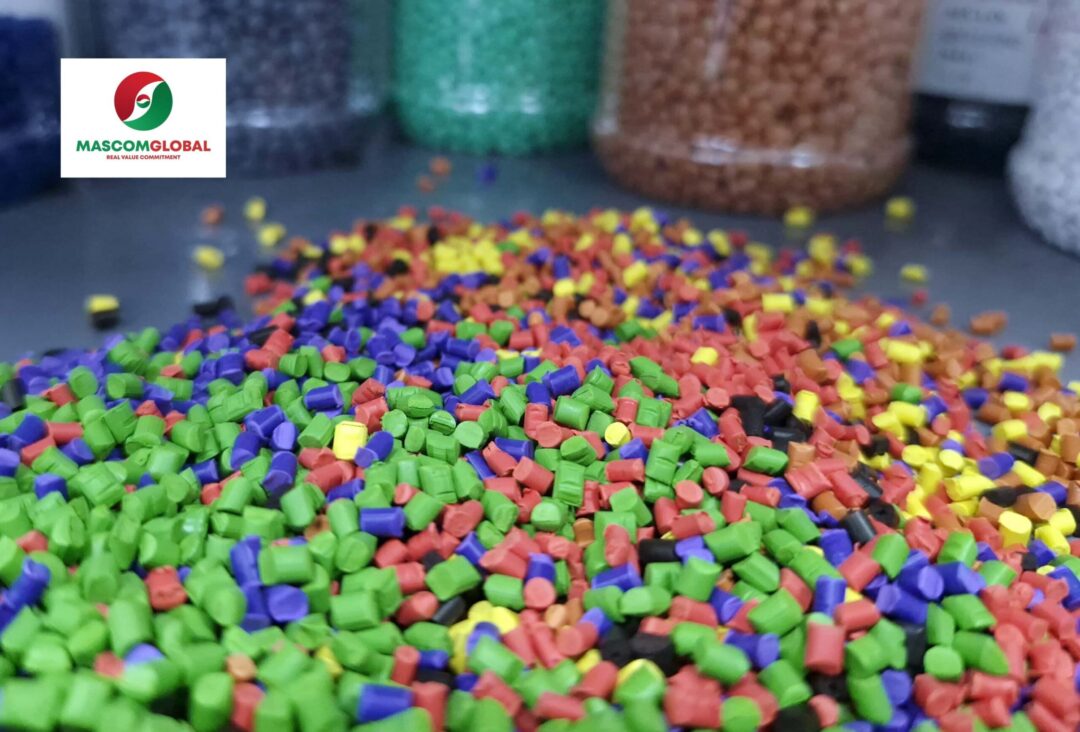
Today’s plastic manufacturers no longer choose color masterbatch based on appearance alone. Several performance-driven factors influence selection decisions, including dispersion quality, heat stability, dosage efficiency, and compatibility with recycled materials.
High-dispersion masterbatches help prevent streaks, color spots, and shade variation, especially in thin films and high-gloss products. Stable formulations allow manufacturers to reduce color dosage while maintaining strong visual impact, leading to cost savings and improved productivity.
Additionally, as sustainability becomes a growing priority, many manufacturers prefer color masterbatches that perform well in recycled polymer systems without compromising color consistency.
Conclusion
Color masterbatch has become an indispensable component of modern plastic manufacturing. From white and black to a wide spectrum of colors, each type of color masterbatch serves specific functional and aesthetic purposes. The most popular color masterbatches are those that combine strong visual performance with processing stability, efficiency, and adaptability.
By selecting the right color masterbatch, manufacturers can enhance product appearance, strengthen brand identity, optimize production processes, and remain competitive in an evolving global plastics market.
