
Blog
What is Black PP? Properties, Applications & Manufacturing Optimization
In the vast landscape of thermoplastic materials, Polypropylene (PP) is often called the “workhorse” of the industry. However, when specific requirements for durability, UV protection, and professional aesthetics arise, Black PP (Black Polypropylene) takes center stage. For manufacturers, understanding “What is Black PP” is only half the battle; the real challenge lies in optimizing its performance using additives like Filler Masterbatch.
This comprehensive guide explores the technical depth of Black PP and why it remains a top choice for industrial-grade applications.
1. What is Black PP? An Engineering Perspective
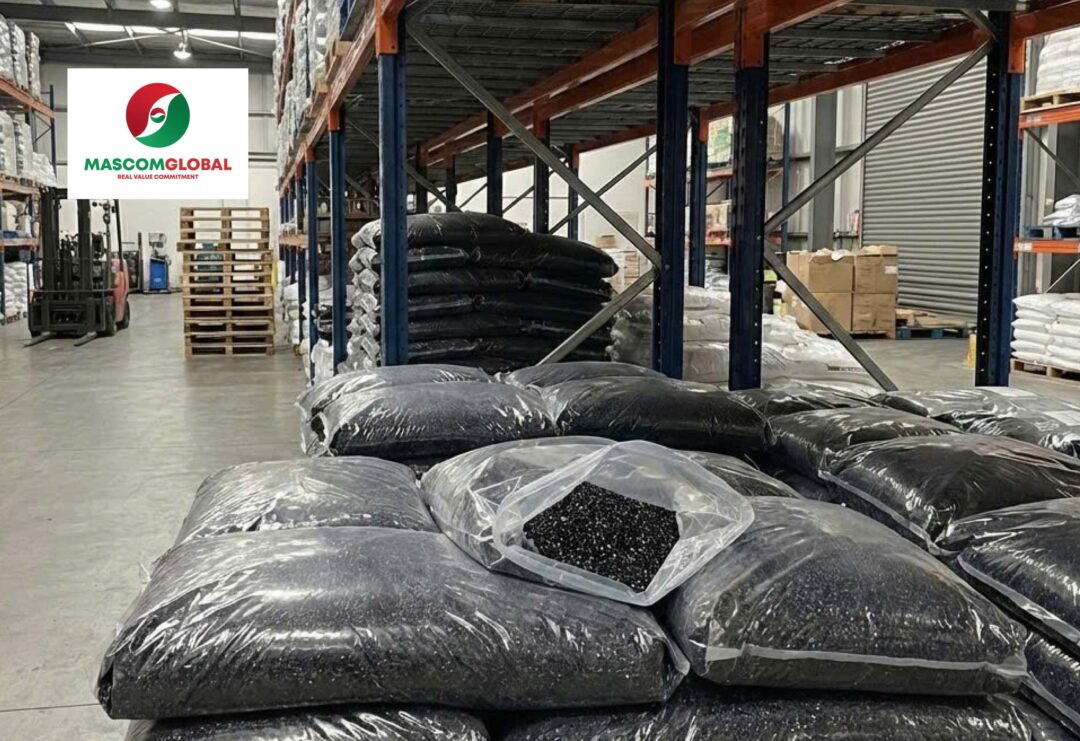
Black PP is a thermoplastic addition polymer made from the combination of propylene monomers. In its natural state, PP is a semi-crystalline, translucent material. To produce it, manufacturers incorporate a high concentration of Carbon Black pigments into the resin during the compounding or injection molding process.
The addition of Carbon Black does not merely change the visual appearance. It acts as a powerful molecular shield. Because Polypropylene is naturally sensitive to photo-oxidation (degradation by light), the black pigment serves as a UV stabilizer, absorbing harmful radiation and converting it into heat before it can break the polymer chains.
2. Key Physical and Chemical Properties
Why choose Black Polypropylene over other colors or materials? The answer lies in its unique property profile:
- UV Resistance: As mentioned, Black Polypropylene is the most sunlight-resistant variant of polypropylene. This makes it ideal for outdoor components that must survive years of exposure without becoming brittle.
- Chemical Inertness: Black Polypropylene is highly resistant to chemical leaching. It stands up to most strong acids, bases, and organic solvents, making it a favorite for chemical storage and piping.
- High Fatigue Resistance: One of the most famous properties of PP is its ability to act as a “living hinge”. Black Polypropylene can be bent thousands of times without cracking, which is essential for consumer electronics and packaging.
- Thermal Stability: With a melting point ranging from 160°C to 171°C, Black Polypropylene maintains its structural integrity in high-heat environments, such as automotive engine compartments.
3. The Role of Filler Masterbatch in Black PP Production
As a leading Filler Masterbatch company, we understand that cost and performance are the two pillars of plastic manufacturing. Using 100% virgin Black Polypropylene is often not the most efficient route. This is where Filler Masterbatch (CaCO3 or Talc-based) becomes a game-changer.
Enhancing Mechanical Strength
While pure PP is tough, it can sometimes be too flexible for certain structural applications. By adding PP Filler Masterbatch, manufacturers can significantly increase the stiffness and flexural modulus of the final product. This is particularly important for heavy-duty items like industrial pallets or automotive bumpers.
Cost Optimization and Economic Stability
The price of virgin PP resin fluctuates with global oil prices. Filler Masterbatch provides a stable, cost-effective alternative. By replacing up to 20% – 40% of the primary resin with high-quality fillers, manufacturers can lower their raw material costs while maintaining high-quality output.
Thermal Conductivity and Cycle Time
Fillers improve the thermal conductivity of the plastic melt. In injection molding, this means the Black Polypropylene part cools down faster inside the mold. Faster cooling translates to shorter cycle times, allowing factories to produce more units per hour, directly increasing profitability.
4. Broad Applications of Optimized Black PP
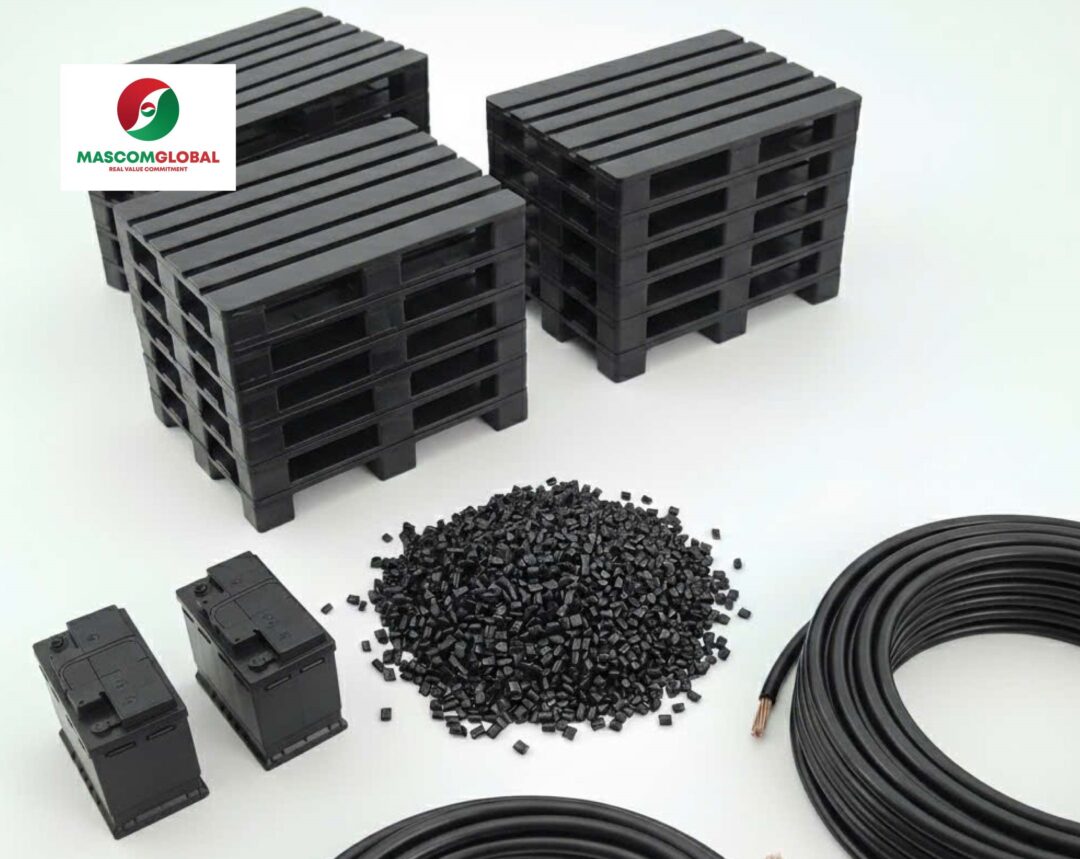
When Black Polypropylene is correctly formulated with the right filler and pigment balance, it is utilized in the most demanding industries:
- Automotive Industry: Most under-the-hood components, fender liners, battery cases, and interior door panels are made of Black Polypropylene because it hides dirt, resists heat, and withstands vibration.
- Industrial Packaging: Think of the black crates used in logistics or heavy-duty pallets. These require the impact resistance of PP combined with the stiffness provided by Filler Masterbatch.
- Consumer Goods: Vacuum cleaner housings, power tool bodies, and garden furniture rely on Black Polypropylene for its sleek look and rugged durability.
- Electronic Equipment: Black Polypropylene is used for cable insulation and housings where light-blocking (opacity) is required to protect internal sensors.
5. Challenges and Solutions in Manufacturing
A common challenge in producing Black PP is achieving a smooth, glossy finish when high levels of filler are used. To solve this, it is crucial to use a high-dispersion Filler Masterbatch. Poorly dispersed fillers can lead to “white spots” or uneven surfaces. A premium filler ensures that the Carbon Black and the mineral particles are distributed uniformly, resulting in a deep, consistent black finish with a high-quality surface feel.
6. Conclusion
In summary, Black PP is a versatile, high-performance material that serves as the backbone of modern industrial manufacturing. Its ability to resist UV rays, chemicals, and physical fatigue makes it indispensable.
However, the modern market demands more than just a “good” material; it demands efficiency. By integrating high-quality Filler Masterbatch into the production line, companies can achieve a superior product that is both stronger and more cost-effective. Whether you are producing automotive parts or consumer appliances, the synergy between Black PP and professional-grade fillers is the key to industrial success.
