
Blog
Additive Masterbatch for PP : Enhancing Performance and Durability
Additive masterbatch for PP is transforming the world of polypropylene (PP) manufacturing, enabling this versatile thermoplastic to meet the diverse demands of modern industries. Polypropylene is prized for its lightweight nature, cost-effectiveness, and adaptability, making it a staple in applications ranging from packaging to automotive components.
However, to achieve enhanced performance characteristics such as UV resistance, flame retardancy, or superior mechanical strength polypropylene additives are essential. This comprehensive guide explores the role of PP masterbatch, its types, benefits, applications, selection criteria, and emerging trends, providing manufacturers with the insights needed to leverage these solutions effectively.
What is Additive Masterbatch for PP?
An additive masterbatch for PP is a concentrated blend of performance-enhancing additives encapsulated within a polypropylene carrier resin. These additives are seamlessly integrated into the base PP during processing, imparting specific properties like improved durability, color consistency, or thermal stability.
By using polypropylene masterbatch, manufacturers can tailor the polymer’s characteristics to suit precise application requirements without modifying its core structure. This approach ensures cost-efficiency and versatility, making PP masterbatch a cornerstone of modern plastics manufacturing.
Typically supplied in pellet form, PP additives are easy to handle and integrate into existing production processes, such as extrusion or injection molding. The uniform dispersion of additives ensures consistent product quality, which is critical for industries like packaging, automotive, and agriculture.
For businesses targeting global markets, such as the US or Europe, sourcing high-quality additive masterbatch from Vietnam offers a competitive edge due to the country’s robust manufacturing capabilities and adherence to international standards. For more details, explore this guide on Vietnam additives masterbatch to understand how these solutions enhance PP processing.
Types of Additive Masterbatch for PP
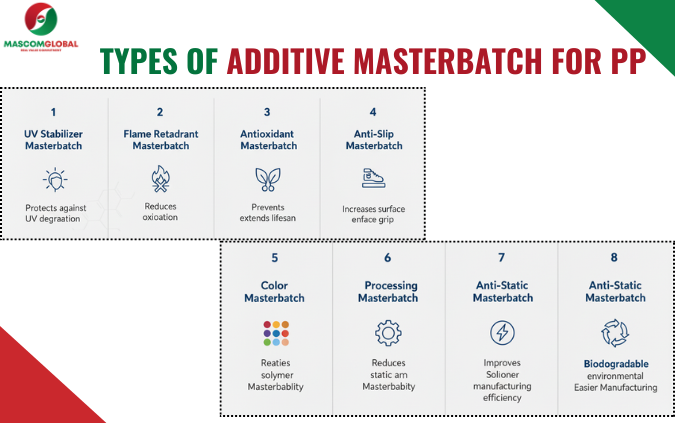
Polypropylene masterbatch comes in various formulations, each designed to address specific performance challenges. Below is a detailed overview of the most common types:
1. UV Stabilizer Masterbatch
UV stabilizer additives protect polypropylene products from degradation caused by prolonged exposure to ultraviolet (UV) radiation. This is crucial for outdoor applications, such as agricultural films, outdoor furniture, and automotive exterior parts, where UV exposure can lead to brittleness, color fading, or loss of mechanical integrity. By incorporating UV stabilizer masterbatch, manufacturers can extend the service life of PP products in harsh environmental conditions.
2. Flame Retardant Masterbatch
Flame retardant PP masterbatch enhances the fire resistance of polypropylene, making it suitable for applications requiring stringent safety standards, such as electrical housings, construction materials, and textile fibers. These additives reduce flammability, slow flame spread, and minimize smoke generation, ensuring compliance with regulations like UL 94 or EN 13501.
3. Antioxidant Masterbatch
Antioxidant additives prevent oxidative degradation during high-temperature processing and extend the lifespan of PP products in oxidative environments. This is particularly valuable for applications like automotive components or industrial pipes, where exposure to heat and oxygen can compromise material integrity over time.
4. Anti-Slip Masterbatch
Anti-slip additives increase surface friction, making them ideal for packaging films, conveyor belts, and industrial components where grip is essential. These masterbatches enhance safety and functionality in applications requiring secure handling or stacking.
5. Color Masterbatch
Color masterbatch not only enhances the aesthetic appeal of PP products but also contributes to functional properties like UV resistance and thermal stability. Available in a wide range of hues, these additives are used in consumer goods, packaging, and textiles to achieve vibrant, durable finishes.
6. Processing Aid Masterbatch
Processing aid additives improve the flow properties of polypropylene during manufacturing, reducing melt viscosity, minimizing die build-up, and enhancing mold release. This leads to smoother production processes, fewer defects, and improved surface quality in finished products.
7. Anti-Static Masterbatch
Anti-static PP additives reduce static charge buildup, which is critical for electronic packaging, medical devices, and cleanroom applications. These masterbatches prevent dust attraction and electrostatic discharge, ensuring product safety and performance.
8. Biodegradable Masterbatch
With growing emphasis on sustainability, biodegradable additives enable PP products to break down more effectively in specific environments, aligning with eco-friendly initiatives in packaging and agriculture.
Benefits of Using Additive Masterbatch for PP
Incorporating polypropylene additives offers a range of advantages that make them indispensable for manufacturers:
-
Superior Durability
Additives like UV stabilizers and antioxidants protect PP from environmental stressors, such as sunlight, heat, and oxidation, significantly extending product lifespan. -
Cost-Effectiveness
By enhancing base PP with targeted additives, manufacturers can achieve high-performance properties without relying on costly specialty polymers, reducing overall production costs. -
Customization and Versatility
PP masterbatch allows manufacturers to tailor polypropylene for diverse applications, from flexible films for packaging to rigid components for automotive parts, meeting specific performance criteria. -
Streamlined Manufacturing
Processing aids improve melt flow and mold release, reducing production downtime, minimizing defects, and enhancing efficiency in high-volume manufacturing. -
Sustainability
Biodegradable and recyclable additives align PP products with environmental goals, appealing to eco-conscious consumers and regulatory bodies. -
Regulatory Compliance
Additive masterbatch ensures PP products meet industry standards, such as FDA requirements for food contact materials or UL standards for fire safety, facilitating market access.
Applications of Additive Masterbatch for PP
Polypropylene additives are employed across a wide range of industries, each leveraging their unique benefits:
1. Packaging Industry
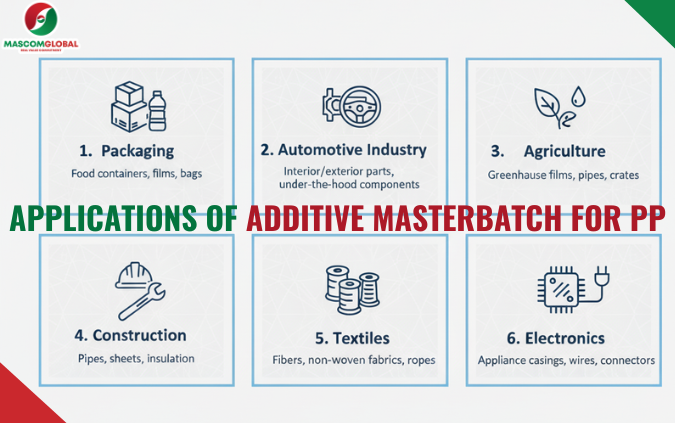
PP masterbatch is widely used in packaging to produce films, containers, and bottles with enhanced strength, clarity, and UV resistance. Anti-static and anti-slip additives improve functionality for food packaging, industrial bags, and shrink wraps, ensuring safe handling and storage.
2. Automotive Industry
In the automotive sector, additives for polypropylene enable the production of lightweight, durable components like bumpers, dashboards, and interior trims. Flame retardant and UV stabilizer masterbatches ensure safety and longevity, even in demanding conditions.
3. Agriculture
Agricultural films, greenhouse covers, and irrigation pipes benefit from UV stabilizer additives, which protect against sun-induced degradation, extending service life in harsh outdoor environments.
4. Construction
PP additives enhance the durability of construction materials like pipes, fittings, and insulation. Flame retardant and antioxidant masterbatches ensure compliance with building codes and long-term performance.
5. Textiles
PP fibers and non-woven fabrics used in carpets, geotextiles, and medical textiles leverage flame retardant and color additives for improved safety, aesthetics, and durability.
6. Electronics
Anti-static and flame retardant masterbatches are critical for PP components in electronics, such as casings and connectors, ensuring safety and reliability in sensitive applications.
How to Choose the Right Additive Masterbatch for PP
Selecting the appropriate PP masterbatch requires careful consideration of several factors:
-
Application Requirements: Identify the specific performance needs, such as UV resistance, flame retardancy, or mechanical strength, based on the end-use application.
-
Processing Conditions: Ensure the masterbatch is compatible with manufacturing processes, including temperature ranges and equipment like extruders or injection molders.
-
Regulatory Compliance: Verify that the additives meet relevant standards, such as FDA regulations for food packaging or REACH compliance for European markets.
-
Supplier Reliability: Partner with reputable suppliers who offer consistent quality, technical support, and customization options.
-
Cost vs. Performance: Balance the cost of high-performance additives with the desired properties to optimize production budgets.
Mascom Global—Your Trusted Partner for PP Additives
For businesses seeking high-quality additive masterbatch, Mascom Global, a Vietnam-based manufacturer established in 2016, is a leading choice. With over 20 production bases, 300 staff, and exports to 80+ countries, Mascom Global specializes in additive, filler, and color masterbatches, as well as PVC compounds. Their eco-friendly solutions cater to industries like packaging, automotive, and construction, meeting international standards. Visit Mascom Global to explore their offerings and request customized solutions.
Challenges and Solutions in Using PP Masterbatch
While polypropylene additives offer significant benefits, manufacturers may encounter challenges:
-
Dispersion Issues
Poor additive dispersion can lead to inconsistent performance or visual defects. Solution: Use high-quality masterbatches with advanced carrier resins and conduct thorough mixing during processing. -
Cost Considerations
High-performance additives can increase production costs. Solution: Optimize additive loading rates and explore cost-effective formulations without compromising quality. -
Compatibility
Incompatible masterbatches may affect PP’s mechanical properties. Solution: Perform compatibility testing with the base resin and consult with suppliers for tailored solutions. -
Regulatory Hurdles
Meeting stringent regulations can be complex. Solution: Partner with suppliers who provide certified masterbatches and documentation for compliance.
Future Trends in Additive Masterbatch for PP
The future of PP additives is marked by innovation and sustainability:
-
Sustainable Masterbatches
Bio-based and recyclable additives are gaining traction, enabling PP products to meet environmental regulations and consumer demand for eco-friendly materials. -
Smart Additives
Emerging technologies like self-healing, antimicrobial, or conductive additives are expanding PP’s applications in medical, electronics, and smart packaging sectors. -
Nanotechnology
Nano-additives enhance properties like strength, barrier performance, and thermal stability, offering superior performance with minimal additive loading. -
Digital Integration
Advanced manufacturing techniques, such as real-time additive dosing and IoT-enabled quality control, are improving precision in masterbatch integration.
Conclusion
Additive masterbatch for PP is a game-changer in polypropylene manufacturing, enabling tailored solutions for diverse industries. From enhancing durability and safety to improving processing efficiency and sustainability, PP additives unlock new possibilities for this versatile polymer. By selecting the right masterbatch and partnering with reliable suppliers like Mascom Global, manufacturers can achieve superior product quality, meet regulatory standards, and stay ahead in competitive markets. As innovations like sustainable and smart additives continue to emerge, the future of polypropylene masterbatch promises even greater potential for transforming the plastics industry.
 Contact information
We have many different types of additives for your application. If you have any needs, please contact us to get the best quotation. Thank you!
Phone: (+84) 925 202 888
Gmail: info@mascomglobal.com
Address: Tien Tien Industrial, Quang Tien Commune, Hoa Binh, Vietnam
My Dinh Plaza 2 Building, 02 Nguyen Hoang Str., Nam Tu Liem Dist., Hanoi, Vietnam
Facebook: Mascom Global
