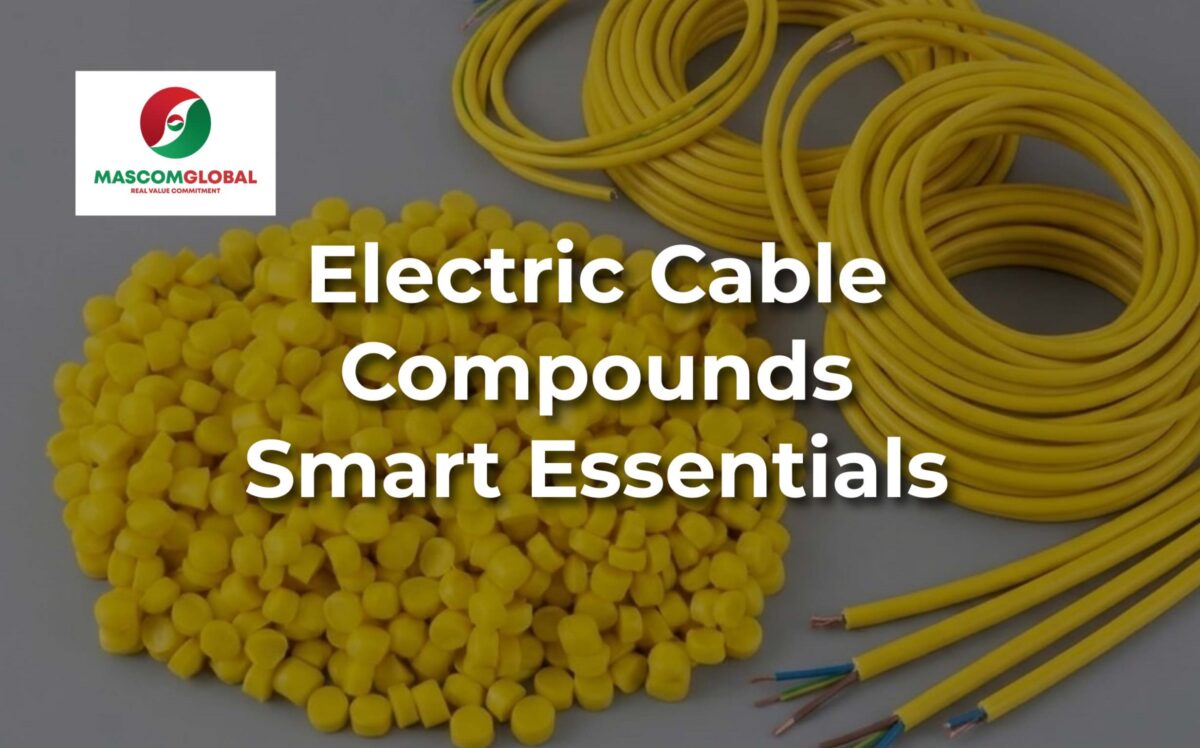
A cable may look simple from the outside: a conductor surrounded by insulation and an outer sheath.
But behind that structure is a carefully engineered polymer system designed to handle electricity, heat, mechanical stress, moisture, chemicals, and sometimes fire.
This is where Electric Cable Compounds come in. Electric Cable Compounds are specially formulated polymer materials used to produce the insulation and sheath of electrical and power cables. Unlike ordinary plastics, these compounds are designed around the specific performance requirements of the final cable.
WHAT DO ELECTRIC CABLE COMPOUNDS DO?
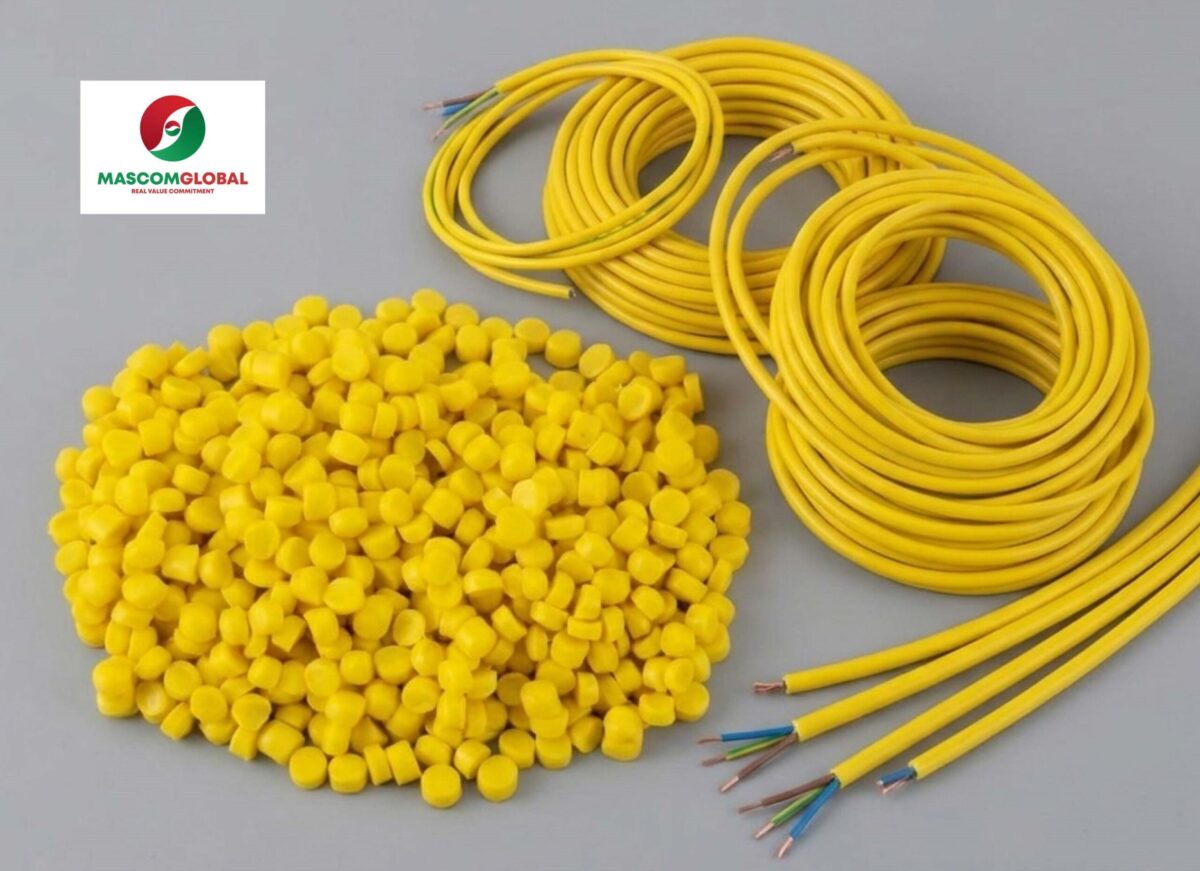
The main purpose of a cable compound is to protect the conductor and help the cable operate safely and reliably.
Depending on the application, a compound may provide:
- Electrical insulation
- Mechanical strength
- Heat resistance
- Flame-retardant performance
- Moisture resistance
- Chemical resistance
- UV and weather resistance
- Flexibility
- Low-smoke or halogen-free performance
Not every cable needs the same combination of properties.
An indoor electrical cable, underground power cable, automotive cable, and outdoor communication cable can face completely different operating conditions.
That is why cable compound selection always starts with the final application.
PVC, PE, XLPE, LSZH - WHAT IS THE DIFFERENCE IN ELECTRIC CABLE COMPOUNDS?
PVC compounds are widely used for general electrical cables because they can provide a useful balance of insulation, flexibility, mechanical strength, and processability.
PE and XLPE are commonly used where electrical insulation, durability, and thermal performance are important. XLPE, in particular, is widely associated with power cable applications requiring higher temperature performance.
For applications where smoke and halogen emissions are a concern, LSZH - Low Smoke Zero Halogen compounds are often considered.
These materials are formulated to minimize smoke generation and avoid halogen-containing materials.
For flexible or specialty cables, TPE and TPU may also be selected when flexibility, abrasion resistance, or other specialized properties are required.
The right polymer depends on what the cable has to do.
FLAME RETARDANCY IS ONLY ONE FEATURE OF ELECTRIC CABLE COMPOUNDS
Fire performance is an important requirement for many cable applications, but it is not the only one.
Adding flame-retardant components can affect other properties, including:
- Flexibility
- Tensile strength
- Elongation
- Processing behavior
- Surface appearance
- Thermal stability
- Dispersion
This creates a formulation challenge.
The goal is not simply to add more flame retardant. The formulation needs to achieve the required fire performance while maintaining the mechanical and processing properties of the cable.
WHY TEMPERATURE & ENVIRONMENT MATTER FOR ELECTRIC CABLE COMPOUNDS
Cable compounds may operate under very different temperature conditions.
A cable installed inside a building does not face the same environment as a power cable, automotive cable, or outdoor cable.
Depending on the application, the compound may need resistance to:
Heat + Moisture + UV + Oil + Chemicals + Abrasion
Long-term performance is also important. A material may pass a laboratory test, but the final cable still needs to maintain its properties during actual service.
PROCESSING PERFORMANCE IN ELECTRIC CABLE COMPOUNDS
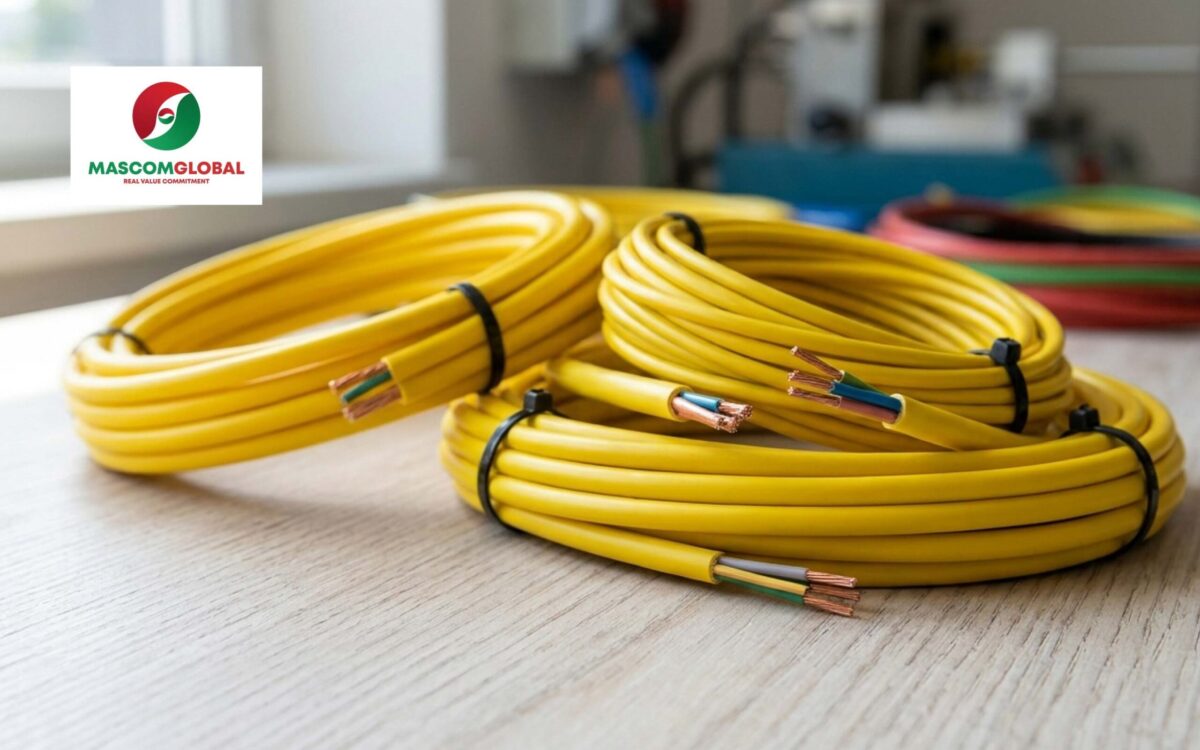
(Illustrative purpose only)
A compound with good laboratory properties must also run consistently on the customer's extrusion line.
Good processing behavior helps maintain:
- Stable melt flow
- Uniform insulation thickness
- Smooth surface
- Consistent dimensions
- Stable production speed
Poor processing can lead to surface defects, dimensional variation, unstable extrusion, and production interruptions.
Therefore, cable compound development must consider both material performance and processing performance.
A CABLE COMPOUND IS PART OF A SYSTEM
Final cable performance is not determined by the polymer alone.
It comes from the interaction between:
Polymer + Additives + Flame Retardant System + Processing Technology + Cable Design + Application Environment
For this reason, the “best” compound on paper may not be the right compound for every customer.
A compound designed for power transmission may have very different requirements from one designed for automotive, construction, communication, or flexible cable applications.
THE RIGHT COMPOUND STARTS WITH THE RIGHT APPLICATION
Electric Cable Compounds are engineered materials designed to balance electrical insulation, mechanical properties, thermal stability, fire performance, environmental resistance, processability, and long-term reliability.
The key is not simply choosing a material with the longest specification sheet.
It is choosing a formulation that fits the cable design, production process, operating environment, and final performance requirements.
At Mascom Global, compound development focuses on connecting material formulation with real processing and application needs.
Because in cable manufacturing, the insulation and sheath are not simply protective layers.
They are part of what makes the cable perform safely and reliably.