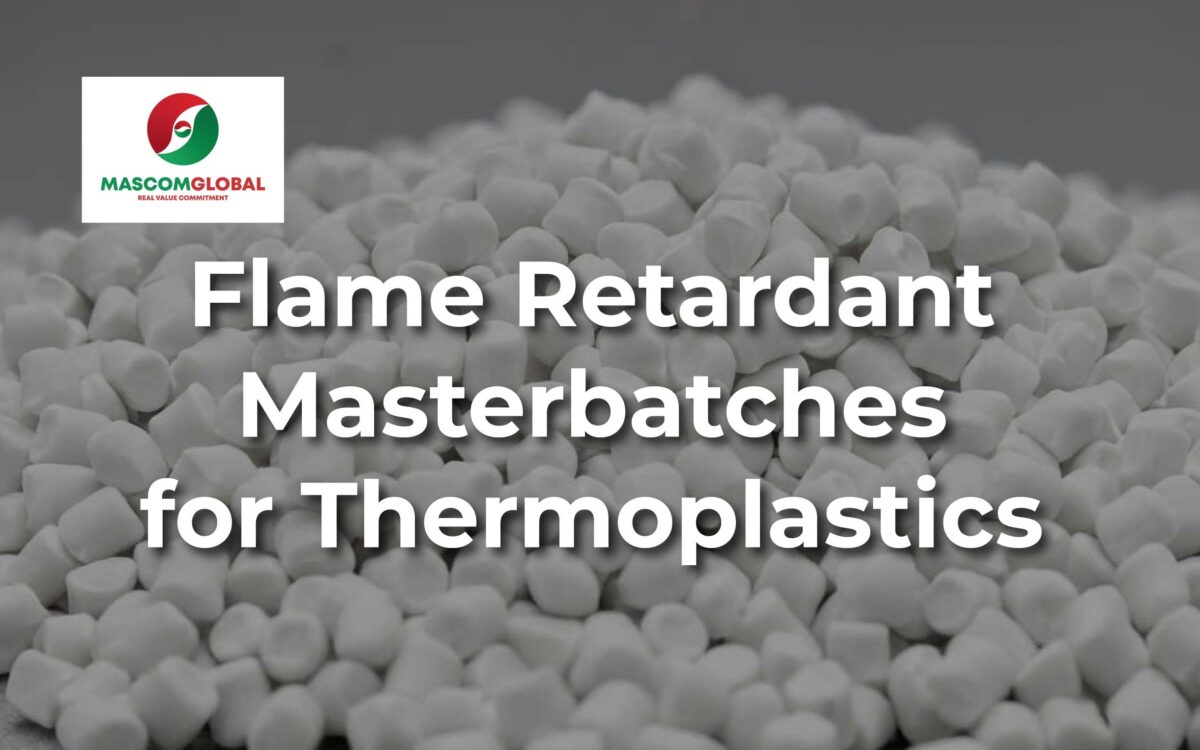
[Mascom Global] Flame retardant masterbatches for thermoplastics are an essential solution for improving fire safety in plastic products used across various industries. As global safety regulations become increasingly stringent, manufacturers are under pressure to develop thermoplastic materials that offer excellent flame resistance while maintaining mechanical strength, aesthetic quality, and processing efficiency. Flame retardant masterbatches provide an effective and reliable way to meet these requirements.

(Illustrative purposes only)
Understanding Flame Retardant Masterbatches
Flame retardant masterbatches are concentrated formulations of flame retardant additives uniformly dispersed within a compatible polymer carrier resin. These masterbatches are added to base thermoplastic materials during extrusion or injection molding to enhance their resistance to ignition and flame spread. Compared to direct dosing of flame retardant chemicals, masterbatches offer superior dispersion, safer handling, and more consistent performance in the final product.
They are suitable for a wide range of thermoplastics, including polypropylene (PP), polyethylene (PE), polystyrene (PS), ABS, polycarbonate (PC), polyamide (PA), and other engineering plastics. This versatility makes flame retardant masterbatches a preferred choice for manufacturers serving diverse markets.
Mechanisms of Flame Retardancy
Flame retardant masterbatches work by interfering with the combustion process through different mechanisms. Depending on the formulation, they may act in the solid phase, gas phase, or both. Common flame-retardant mechanisms include reducing heat release, promoting char formation to create a protective barrier, releasing inert gases that dilute oxygen, and inhibiting flame propagation at a chemical level.
Based on their chemistry, flame retardant masterbatches are generally categorized into halogenated, halogen-free, and mineral-based systems. Each type offers specific advantages depending on fire performance requirements, environmental considerations, and regulatory compliance.
Advantages of Using Flame Retardant Masterbatches
The use of flame retardant masterbatches offers several key benefits to plastic processors and product manufacturers:
- Enhanced Fire Safety: Enables thermoplastic products to meet international flame retardancy standards such as UL 94, IEC, ROHS, and REACH.
- Uniform Dispersion: Ensures consistent flame retardant performance throughout the entire plastic part.
- Ease of Processing: Compatible with standard processing equipment and does not require major changes in production parameters.
- Cost Efficiency: Reduces raw material waste and minimizes quality variation compared to direct additive blending.
- Preserved Material Properties: Maintains mechanical strength, surface finish, and dimensional stability of thermoplastic products.
Wide Range of Industrial Applications

(Illustrative purposes only)
Flame retardant masterbatches are widely used in applications where fire safety is a critical concern. In the electrical and electronics industry, they are applied in cable insulation, connectors, switch housings, and electronic enclosures. In the automotive sector, flame-retardant thermoplastics are used for interior components, dashboards, battery housings, and under-the-hood parts.
The construction industry relies on flame retardant masterbatches for pipes, conduits, wall panels, and insulation materials. Household appliances, consumer electronics, and industrial equipment also benefit from improved fire performance provided by these masterbatches. As safety awareness continues to grow, demand for flame retardant thermoplastics is expected to increase steadily worldwide.
Halogen-Free Flame Retardant Masterbatches
In recent years, halogen-free flame retardant masterbatches have gained significant attention due to environmental and health concerns. These solutions produce less smoke, lower toxicity, and reduced corrosive gases during combustion. They are designed to comply with strict environmental regulations and sustainability initiatives, making them ideal for applications in public spaces, transportation, and consumer products.
Selecting the Right Flame Retardant Solution
Choosing the appropriate flame retardant masterbatch depends on several factors, including the type of base polymer, processing temperature, target flame rating, mechanical performance requirements, and end-use conditions. Collaborating with a reliable and experienced masterbatch supplier ensures optimal formulation, regulatory compliance, and long-term product performance.
Conclusion
Flame retardant masterbatches for thermoplastics are a key component in the development of safe, reliable, and high-performance plastic products. By combining excellent flame resistance with ease of processing and material integrity, these masterbatches help manufacturers meet evolving safety standards and enhance product value. Investing in the right flame retardant masterbatch is a strategic step toward improved safety, sustainability, and market competitiveness.