Blog
What Is PBAT? Applications and Benefits of PBAT in Modern Biodegradable Packaging
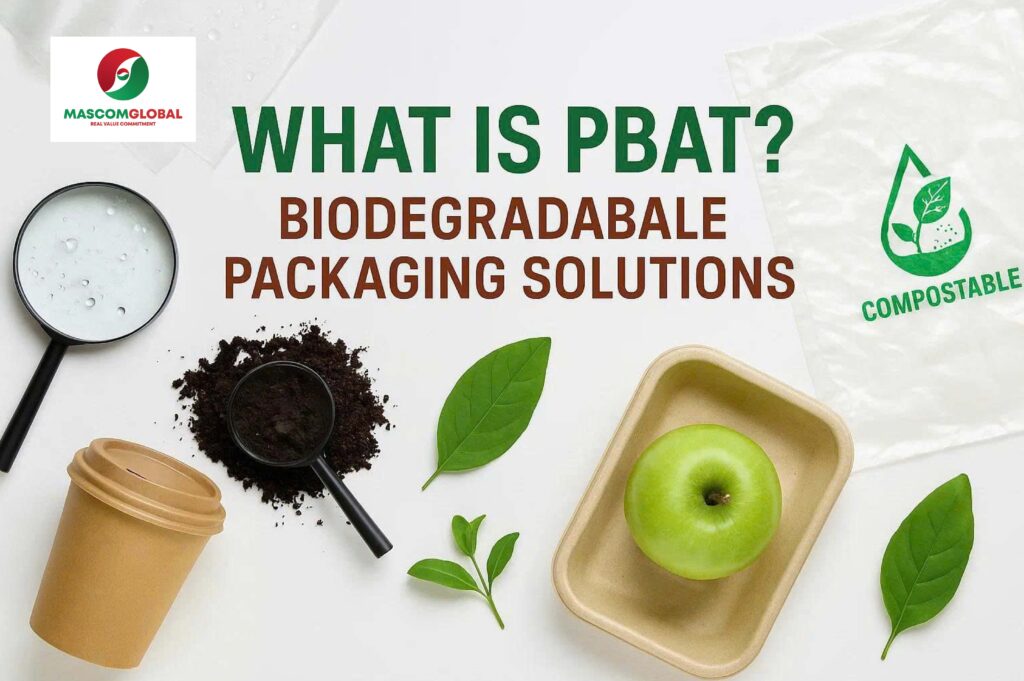
In recent years, the global shift toward eco-friendly materials has accelerated rapidly as governments tighten regulations on single-use plastics and promote circular economy models. Among the many biodegradable polymers emerging on the market, PBAT (Polybutylene Adipate Terephthalate) stands out as a strategic material thanks to its excellent mechanical properties and full biodegradability. PBAT is now widely considered one of the most promising solutions for sustainable packaging.
1. What Is PBAT?
PBAT is a biodegradable polyester, belonging to the aliphatic–aromatic polymer family. It is a copolymer synthesized from Butylene Adipate (BA) and Terephthalate (T). This unique structure gives PBAT mechanical properties similar to LDPE, especially in terms of flexibility and elongation.
A major advantage of PBAT is its ability to biodegrade under industrial composting conditions, where heat, moisture, and microorganisms break down the polymer chain into water, CO₂, and biomass — without leaving behind harmful microplastics.
Key Properties of PBAT
- Excellent flexibility and high elongation
- Good film-forming ability, suitable for blown film
- High compatibility with PLA, PBS, and natural starch
- Strong mechanical properties, addressing the brittleness of PLA
- Rapid biodegradation under composting conditions
- Safe for food-contact applications and non-toxic
Because of these strengths, PBAT has become one of the core materials driving the biodegradable packaging industry.
2. How PBAT Biodegrades
PBAT biodegradation occurs through the breakdown of ester bonds in its polymer chain. However, this process only takes place efficiently in certain environments, such as industrial composting facilities.
Biodegradation conditions:
- Temperature: 50–60°C
- Humidity: 70–80%
- Aerobic conditions (presence of oxygen)
- Microorganisms that produce ester-degrading enzymes
PBAT decomposition happens in two main stages:
- Hydrolysis of ester bonds, reducing molecular weight
- Microbial assimilation, converting PBAT into CO₂, water, and biomass
Thanks to this mechanism, PBAT-based products are able to meet international compostability standards such as EN 13432 and ASTM D6400, depending on the formulation.
3. Applications of PBAT in Industry
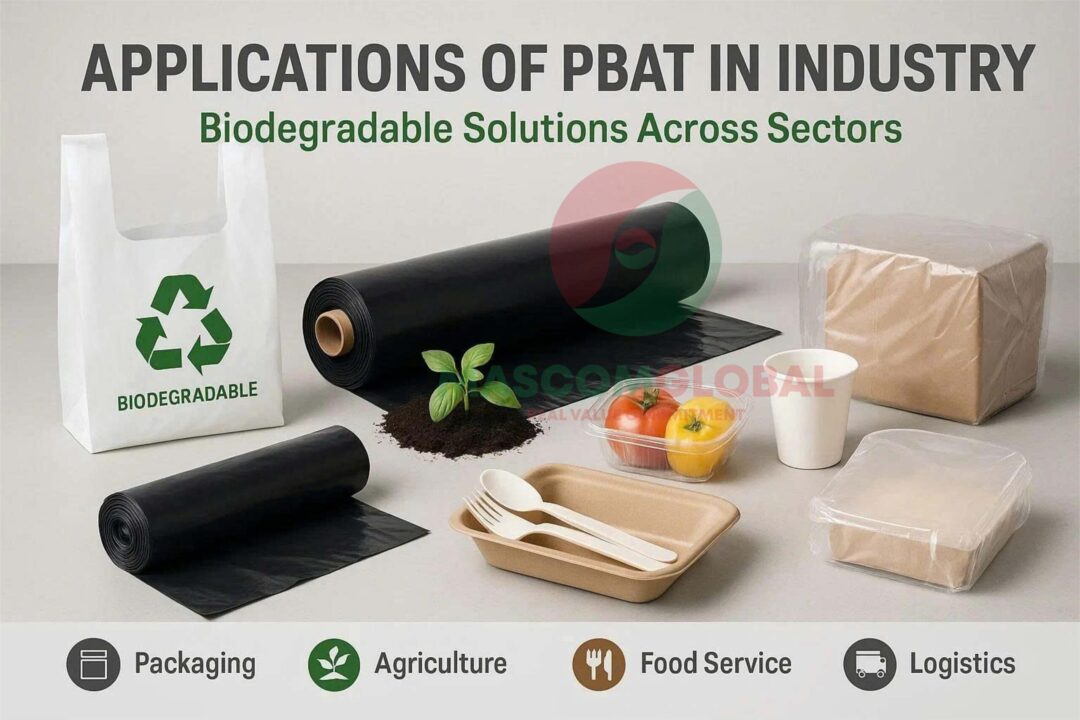
PBAT is widely used across multiple industries, especially in packaging, agriculture, and single-use biodegradable products.
3.1. Fully Biodegradable Bags
This is the most common application. PBAT is often blended with PLA or starch to produce:
- Biodegradable garbage bags
- Eco-friendly shopping bags
- Organic waste bags
- Multi-purpose supermarket bags
PBAT contributes flexibility, toughness, and resistance to tearing — making the bags more practical than PLA-only alternatives.
3.2. Biodegradable Agricultural Films
PBAT-based mulch films are gaining popularity because they:
- Maintain soil moisture
- Regulate soil temperature
- Suppress weed growth
- Do not require collection after harvest
- Reduce agricultural plastic waste
This makes PBAT a sustainable alternative to conventional PE mulch films.
3.3. Food Packaging Materials
With its food-safe and non-toxic nature, PBAT is frequently used in:
- Cling wraps
- Fresh produce packaging
- Food pouches
- Fruit and vegetable export bags
PBAT films feel soft, stretch well, and do not become brittle in cold storage.
3.4. Eco-Friendly Single-Use Products
Because PBAT can be processed via injection molding, it is suitable for manufacturing:
- Disposable cutlery
- Biodegradable cups
- Single-use gloves
- Compostable straws
- Medical liners and hygiene products
PBAT products tend to feel softer and more flexible than pure PLA items.
3.5. Packaging and Logistics
Certain protective films, surface-protection films, and packaging wraps are now formulated with PBAT to comply with international sustainability requirements.
4. Key Benefits of PBAT
4.1. Environmentally Friendly
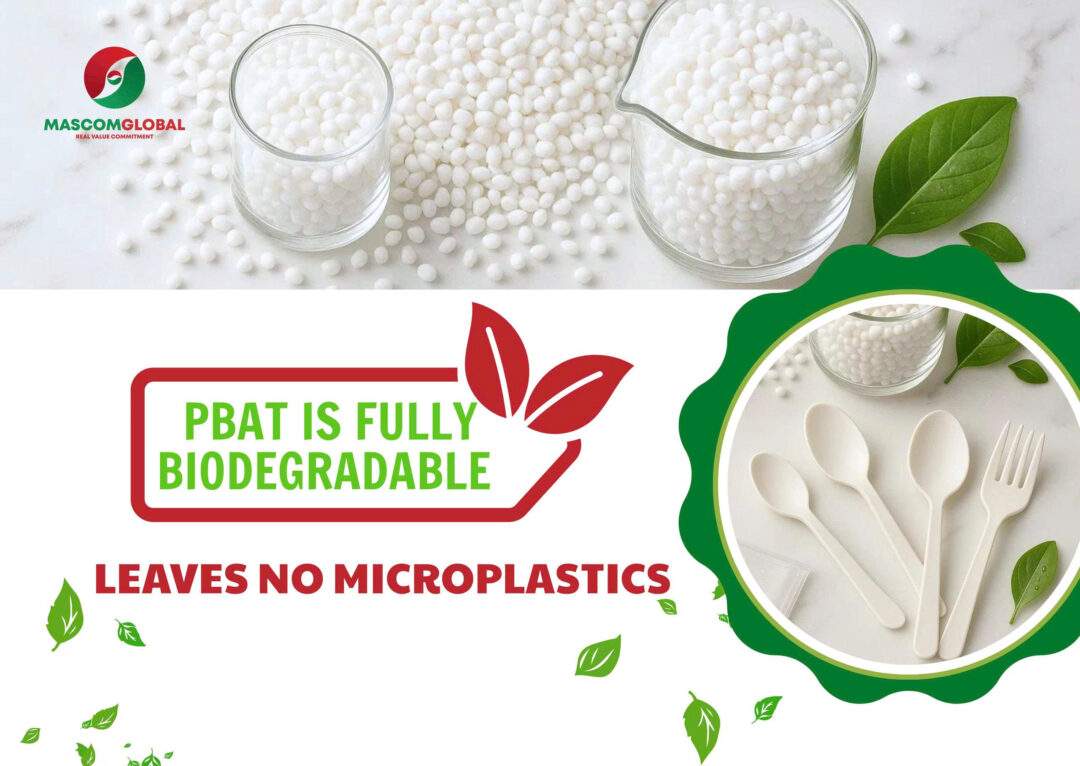
PBAT is fully biodegradable and leaves no microplastics, helping businesses:
- Reduce non-degradable waste
- Minimize soil and water pollution
- Obtain environmental certifications
4.2. LDPE – Like Properties – Easy to Process
With mechanical properties similar to LDPE, PBAT can be processed on:
- Blown film lines
- Injection molding machines
- Extrusion equipment
This means manufacturers do not need to invest in new machinery, only fine-tune certain processing parameters.
4.3. Cost-Optimized Formulations
PBAT can be blended with PLA, PBS, and starch to:
- Reduce material cost
- Improve biodegradability
- Enhance mechanical properties
Its flexibility in formulation is a major competitive advantage.
4.4. Meets Global Sustainability Trends
Major markets such as the EU, the United States, Japan, and South Korea are tightening restrictions on single-use plastics. PBAT-based products have:
- Higher acceptance in premium export markets
- Stronger brand value
- Alignment with sustainability goals
4.5. Safe and Non-Toxic
PBAT releases no harmful substances during production or degradation, making it suitable for:
- Food packaging
- Infant products
- Medical and hygiene materials
5. Conclusion
PBAT is one of the most influential biodegradable polymers driving the future of sustainable packaging. With its full biodegradability, excellent flexibility, and compatibility with existing production lines, PBAT enables manufacturers to transition toward eco-friendly packaging without sacrificing performance.
As the global market shifts toward circular economy models and stricter environmental policies, PBAT is more than just a trend — it is a key material that helps businesses enhance brand value, comply with regulations, and contribute to a greener future.
