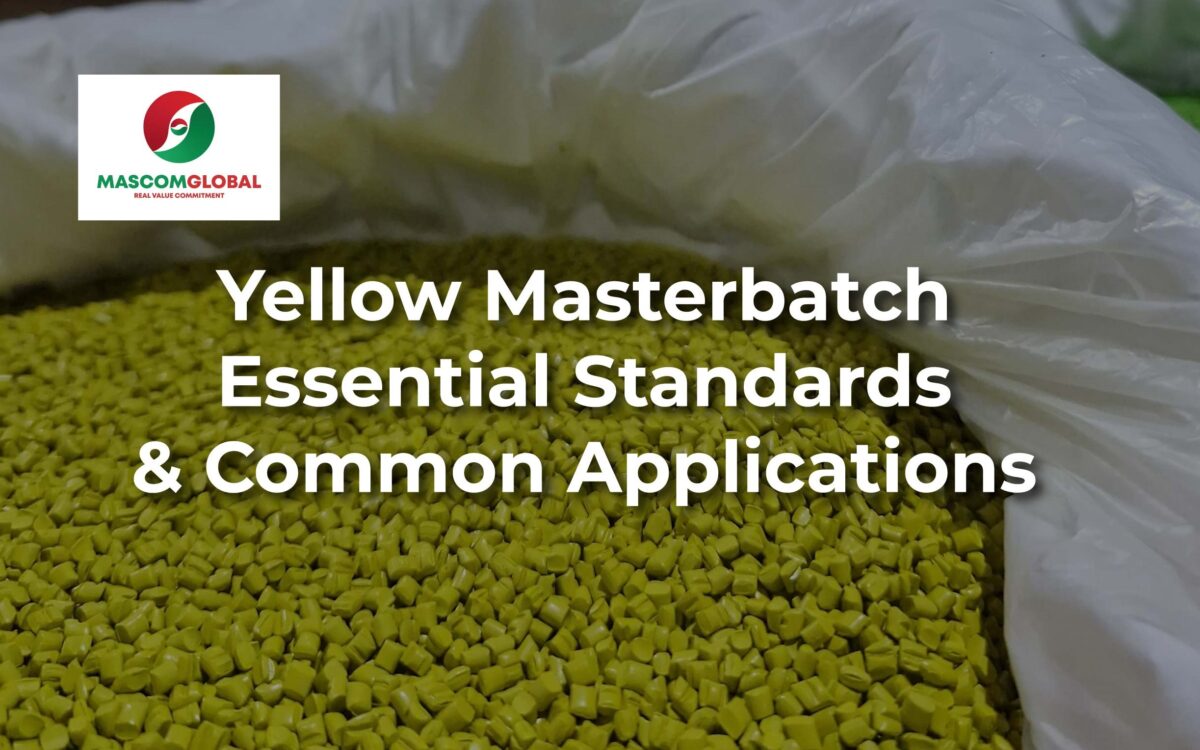
Yellow masterbatch plays a crucial role in the modern plastics industry. Color is more than just an aesthetic feature, as it significantly influences product identity, functionality, and market value. It stands out as one of the most widely used color solutions due to its brightness, visibility, and versatility across
From packaging and agriculture to construction and consumer goods, yellow masterbatch plays an important role in enhancing product appearance while maintaining consistent processing performance. However, to achieve optimal results, manufacturers must ensure that the yellow masterbatch they use meets specific technical and quality standards.
This article explores the key standards required for high-quality yellow masterbatch and its most common applications in the plastics industry.
What is Yellow Masterbatch?

(Illustrative purpose only)
Yellow masterbatch is a concentrated mixture of yellow pigments, polymer carrier resin (such as PE, PP, or other thermoplastics), and dispersing additives. It is designed to impart a consistent yellow color to plastic products during processing.
The effectiveness of yellow masterbatch depends on several factors, including pigment quality, dispersion level, thermal stability, and compatibility with the base resin. A well-formulated yellow masterbatch ensures uniform color, efficient processing, and long-term stability of the final product.
Essential Standards for High-Quality Yellow Masterbatch
Pigment Quality and Tinting Strength
The most important component of this masterbatch is the pigment. High quality pigments provide strong tinting strength, allowing manufacturers to achieve the desired color using a lower dosage. This not only reduces material costs but also improves processing efficiency.
Pigments should also be free from heavy metals and comply with environmental and safety regulations, especially for applications in food packaging and consumer goods.
Excellent Dispersion
Uniform dispersion of pigment within the polymer matrix is essential to avoid color streaks, spots, or uneven shades. Poor dispersion can lead to defects in the final product, particularly in thin films and high-gloss surfaces.
Advanced compounding technologies, such as twin-screw extrusion, are typically used to ensure optimal dispersion in high quality yellow masterbatch.
Thermal Stability
Plastic processing often involves high temperatures, especially in extrusion, injection molding, and blow molding. This masterbatch must have excellent thermal stability to prevent color degradation, fading, or discoloration during processing.
This is particularly important for bright yellow shades, which are more sensitive to heat compared to darker colors.
UV Resistance and Weatherability
For outdoor applications, yellow masterbatch should be resistant to ultraviolet (UV) radiation to maintain color stability over time. UV-resistant formulations help prevent fading, chalking, and degradation when exposed to sunlight.
This standard is critical for applications such as agricultural films, outdoor furniture, and construction materials.
Compatibility with Polymer Systems
A high-quality masterbatch must be compatible with different polymer types, including PE, PP, and recycled plastics. Good compatibility ensures smooth processing, stable melt flow, and consistent product quality.
Low Moisture Content
Moisture in masterbatch can cause processing defects such as bubbles and poor surface finish. Therefore, yellow masterbatch should have low moisture content to ensure stable production and high-quality output.
Common Applications of Yellow Masterbatch
Plastic Packaging
Yellow masterbatch is widely used in packaging applications such as shopping bags, industrial packaging, and food containers. Its bright color enhances product visibility and brand recognition, making it ideal for retail and promotional packaging.
PP Woven Bags

(Illustrative purpose only)
In the production of PP woven bags, yellow masterbatch is often used for agricultural packaging, fertilizer bags, and industrial sacks. It provides strong color visibility and helps differentiate products in storage and transportation.
Blown Film and Agricultural Film
It commonly used in blown film applications, particularly in agriculture. It can be used in mulch films, greenhouse films, and protective covers, where color plays a role in light control and crop management.
Injection Molding Products
Many household items, containers, and industrial components use yellow masterbatch for both functional and aesthetic purposes. It ensures consistent color and enhances product appeal.
Construction Materials
In construction applications such as pipes, sheets, and safety components, masterbatch is used for identification, safety marking, and visual classification.
Blow Molding Applications
The masterbatch is also widely used in blow molded products such as bottles, containers, and tanks. It provides uniform color distribution and stable processing performance.
Conclusion
Yellow masterbatch is an essential material in the plastics industry, offering both functional and aesthetic benefits. To achieve the best results, manufacturers must ensure that the masterbatch meets key standards such as pigment quality, dispersion, thermal stability, UV resistance, and compatibility.
With the right formulation, yellow masterbatch not only enhances product appearance but also improves processing efficiency and long-term performance. As industries continue to demand higher quality and more sustainable solutions, selecting a reliable masterbatch becomes increasingly important for manufacturers aiming to stay competitive in the global market.