
Blog
Plastic vs Rubber: Understanding the Differences
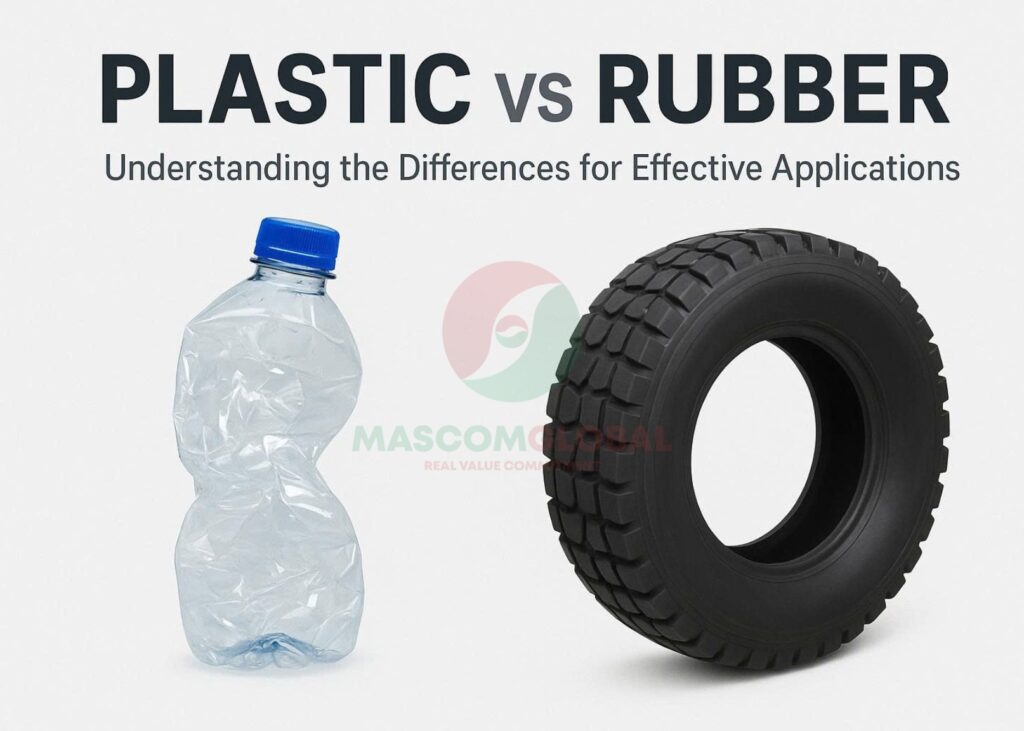
In the field of polymer materials, plastics and rubber are the two most common materials, present in almost every sector from industrial production, consumer goods, to high-tech applications. However, although both belong to the polymer group, plastics and rubber have entirely different properties, leading to significant differences in applications and value.
This article will help you gain a deeper understanding of the nature, characteristics, and technical factors that distinguish these two important materials.
1. Definition and Nature
Plastic is a type of polymer that can be shaped under the influence of heat and pressure, and retains a fixed form once cooled. Depending on the structure and composition, plastics are divided into two main groups:
- Thermoplastics: Can be melted and reshaped multiple times (e.g., PE, PP, PVC, ABS…).
- Thermosets: Once set, they cannot be remelted (e.g., epoxy, phenolic…).
Rubber is also a polymer, but is characterized by high elasticity. It can be stretched, compressed, or deformed under force, and then return to its original shape when the force is removed. To achieve stable properties, rubber must undergo vulcanization — crosslinking polymer chains using sulfur or chemical agents, enhancing durability and environmental resistance.
2. Fundamental Differences Between Plastics and Rubber
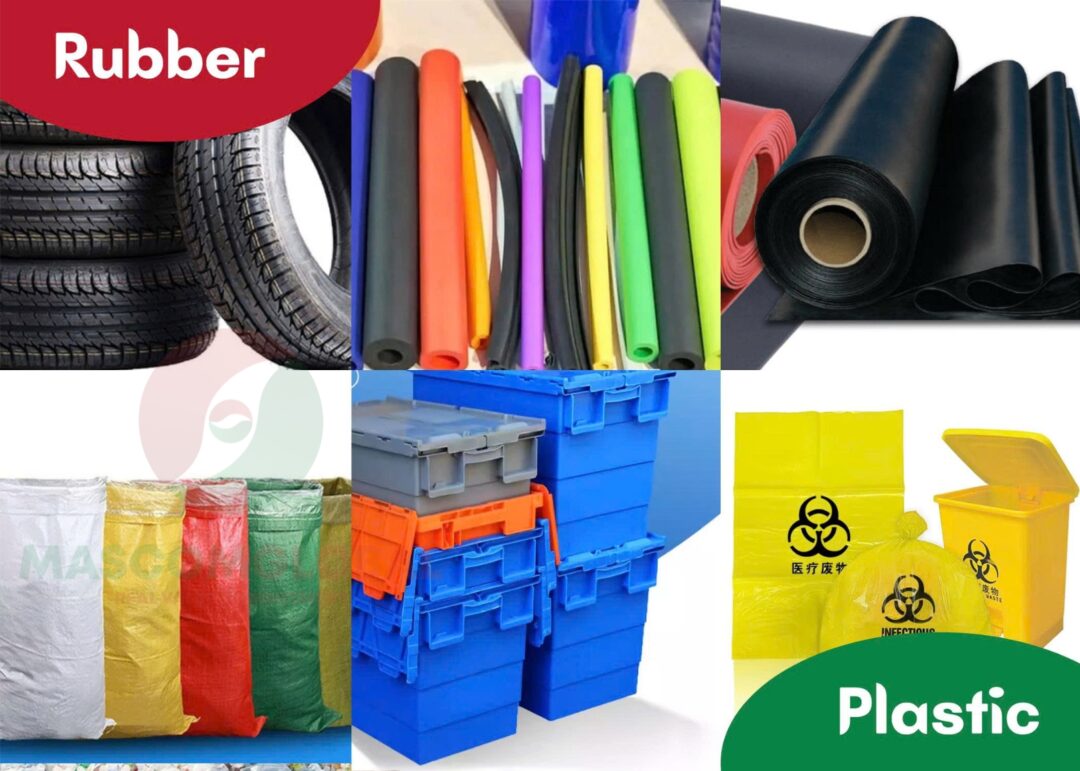
Plastic
- Plastic is a highly moldable material, soft and flexible when heated, and solidifies when cooled.
- Its structure consists of long polymer chains, creating many types of plastics with distinct properties.
- Classification: Thermoplastics: can be melted and reshaped multiple times. Thermosets: can only be shaped once and cannot be remelted.
- Advantages: high rigidity, lightweight, easy to process.
- Applications: packaging, electronic components, consumer devices, and engineering materials.
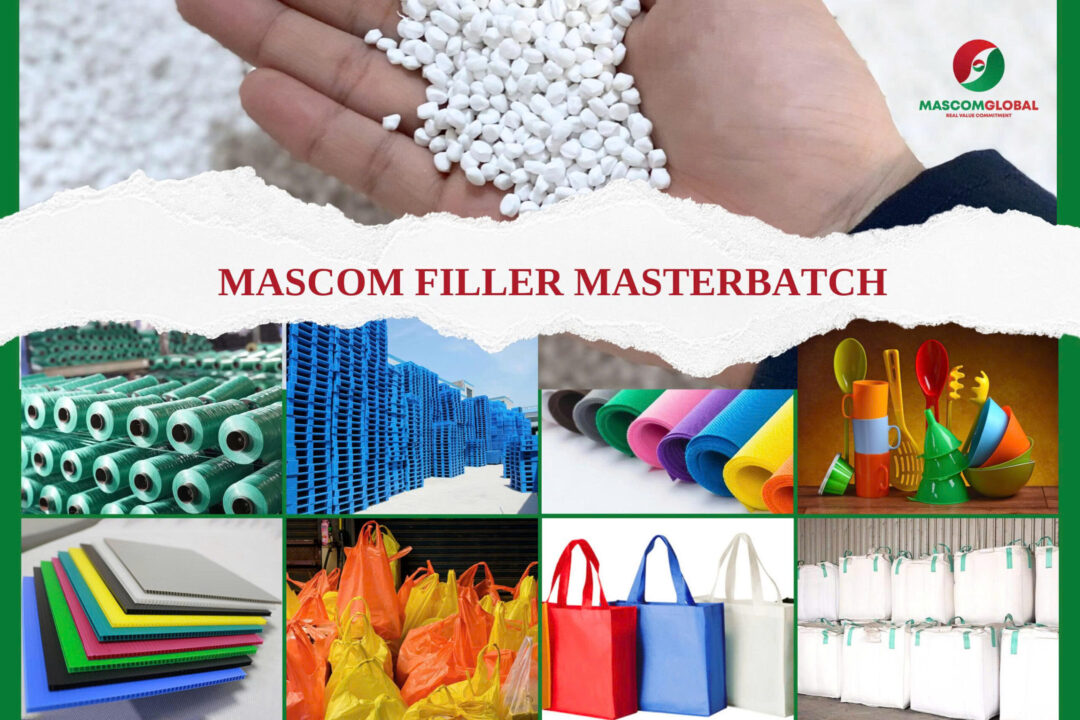
- In manufacturing, plastics are often supplemented with Filler Masterbatch (CaCO₃ granules) to increase hardness, stabilize dimensions, and reduce cost; excessive use may make the material brittle and reduce impact resistance.
- Environmental impact: lightweight, reducing transportation energy; however, most plastics are petroleum-based, non-biodegradable.
- Development trends: recycled plastics, bioplastics, and chemical recycling technologies are being promoted to minimize environmental impact and move toward a circular economy.
Rubber
- Rubber is distinguished by high elasticity, capable of stretching and returning to its original shape after force is removed.
- This property comes from flexible polymer chains stabilized through vulcanization using sulfur or chemical agents.
- Advantages: durable, wear-resistant, does not soften at high temperatures.
- Types: Natural rubber (NR): derived from Hevea brasiliensis latex. Synthetic rubber: SBR, NBR, EPDM, silicone, each with specific properties (NBR oil-resistant, EPDM ozone-resistant, silicone heat and chemical-resistant).
- Applications: tires, gaskets, seals, cushions, flexible hoses, and insulating materials.
- Environmental impact: natural rubber is more biodegradable, but large-scale cultivation requires sustainable management. Synthetic rubber relies on petroleum, causing emissions similar to plastics.
- Recycling: challenging due to vulcanized cross-linked networks; devulcanization technologies and reuse of crumb rubber in asphalt, playgrounds, and construction materials help reduce waste and extend product life.
3. Industrial Applications
In practical production, plastics are favored for their low cost, light weight, and ease of molding. Typical products include packaging, bottles, electronic components, automotive parts, construction materials, and consumer goods. Plastics can also be blended with Filler Masterbatch (CaCO₃) or Additive Masterbatch to improve performance, save costs, and increase mechanical strength.
Rubber, on the other hand, is chosen for applications requiring elasticity, compressive strength, vibration resistance, and impact resistance. It is indispensable in the automotive, aerospace, mechanical, electronics, and medical industries. Common types like NR (natural rubber), NBR (nitrile rubber), EPDM, or silicone rubber are used depending on the environment and technical requirements.
4. Advantages and Disadvantages of Each Material
Plastics are lightweight, inexpensive, suitable for mass production, and can generate thousands of variations through polymer blending technology. However, plastics are often less elastic and brittle at low temperatures.
Rubber excels in elasticity, impact resistance, and sealing capability, but vulcanization is more complex, production costs are higher, and recycling options are limited.
5. Trends in Combining Plastics and Rubber
Today, with advancements in material science, manufacturers are moving toward blending plastics and rubber to create Thermoplastic Elastomers (TPE), which combine the elasticity of rubber with the processability and recyclability of plastics. This is a prominent trend in modern polymer industries, optimizing costs while supporting environmental protection.
6. Conclusion
Although both are polymers, plastics and rubber serve different needs. Plastics are suitable for products requiring rigidity, precision, and ease of processing, while rubber is ideal for products needing elasticity, pressure resistance, and sealing performance.
Understanding the differences between these materials helps businesses select the right raw materials, optimize production efficiency, reduce costs, and improve final product quality. Additionally, awareness of the environmental implications of each material can guide sustainable product development and responsible material choices.
At Mascom Global, we provide high-quality plastic material solutions, including Colored plastics, Filler Masterbatch, Technical plastic compounds, and Additive masterbatches. With advanced technology and an experienced engineering team, we accompany customers from material selection to developing optimal formulas, ensuring products meet the highest technical standards while remaining environmentally friendly.
Explore Mascom Global’s solutions to upgrade your products, optimize production processes, and move toward a sustainable future in the plastics and rubber industry.
