
Blog
White Masterbatch – Composition, Applications and Usages
1. What is White Masterbatch?
White Masterbatch is a type of color masterbatch made by mixing key components such as titanium dioxide pigment (TiO₂), carrier resin, and selected additives.
It is designed to enhance whiteness, opacity, and surface gloss of plastic products — especially essential for applications requiring a pure white color, high coverage, and excellent appearance.
Depending on the end-use requirement, the TiO₂ content in White Masterbatch typically ranges from 10% to 75%.
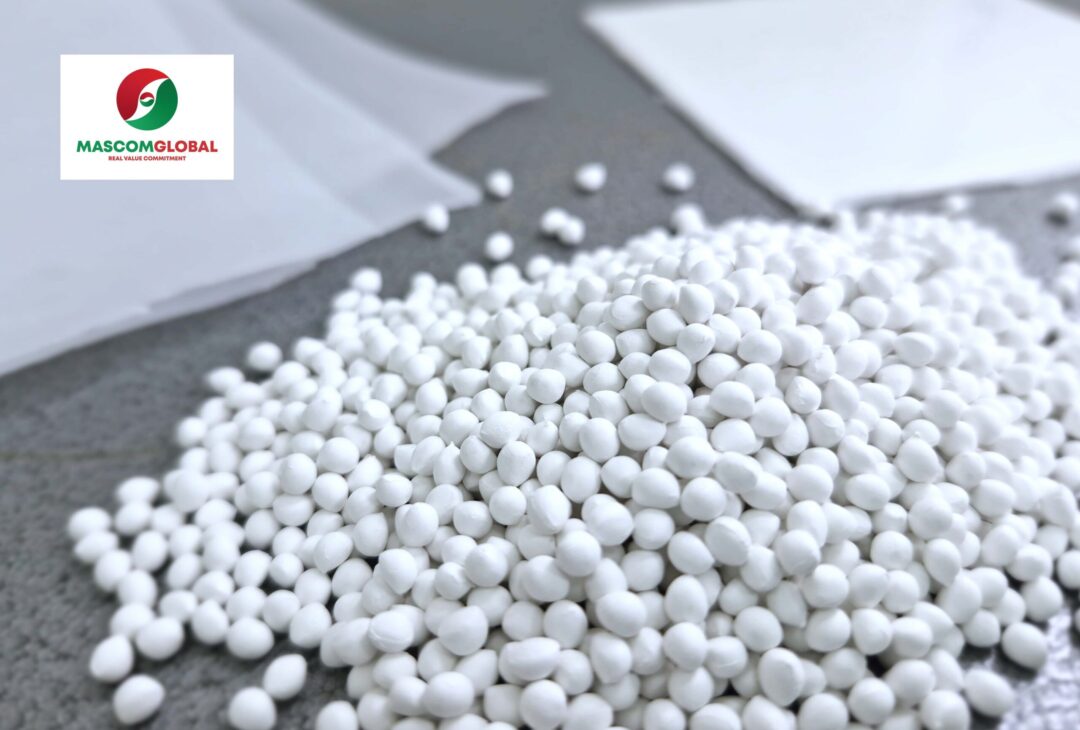
White Masterbatch at Mascom Global Factory
2. Main Components
Below are the key ingredients and their functions in White Masterbatch:
- Titanium Dioxide (TiO₂):
The main whitening pigment providing high opacity and brightness. With its high refractive index, TiO₂ efficiently scatters and reflects light, resulting in whiter, brighter, and more opaque plastic materials.
- Carrier Resin:
The base polymer that carries pigment and additives, ensuring uniform dispersion of TiO₂ into the final plastic. The carrier resin is selected based on compatibility with the end polymer (e.g., PE, PP, PS, ABS…).
- Additives:
May include UV stabilizers, antioxidants, dispersing agents, surface modifiers, and anti-yellowing agents to enhance performance, color stability, and outdoor durability.
3. Key Benefits and Functions
White Masterbatch provides multiple benefits for plastic production:
- Improved Whiteness and Opacity:
With high TiO₂ loading, it gives plastic products a pure white color and excellent hiding power, effectively masking base polymer color or impurities.
- Enhanced Gloss and Aesthetic Value:
Produces smooth, glossy surfaces that increase the visual appeal of plastic products such as packaging, household goods, and decorative parts.
- UV Resistance and Weather Durability:
TiO₂ not only creates whiteness but also absorbs and scatters UV light, improving outdoor performance and preventing discoloration or fading.
- Better Dispersion and Production Stability:
Using masterbatch instead of raw pigment reduces dust, improves color consistency, simplifies dosing, and enhances production efficiency.
- Cost Optimization:
A well-formulated masterbatch delivers desired properties with lower usage rates than dry pigments — reducing cost and improving process control.
4. Applications and Usage Instructions
Common Applications:
White Masterbatch is widely used across plastic industries in various applications, such as:
- Film & Packaging:
Blown film for shopping bags, garbage bags, agricultural film, food packaging, and industrial film.
- Injection Molding:
White-colored plastic items such as household goods, toys, containers, and decorative parts.
- Blow Molding:
Bottles, cans, and containers requiring high whiteness and surface brightness.
- Extrusion:
Sheets, pipes, and profiles made from PVC, PP, or PE needing excellent whiteness and smooth surfaces.
- Other Industries:
Construction materials (pipes, panels), automotive interior parts, electronics, and white appliance housings.
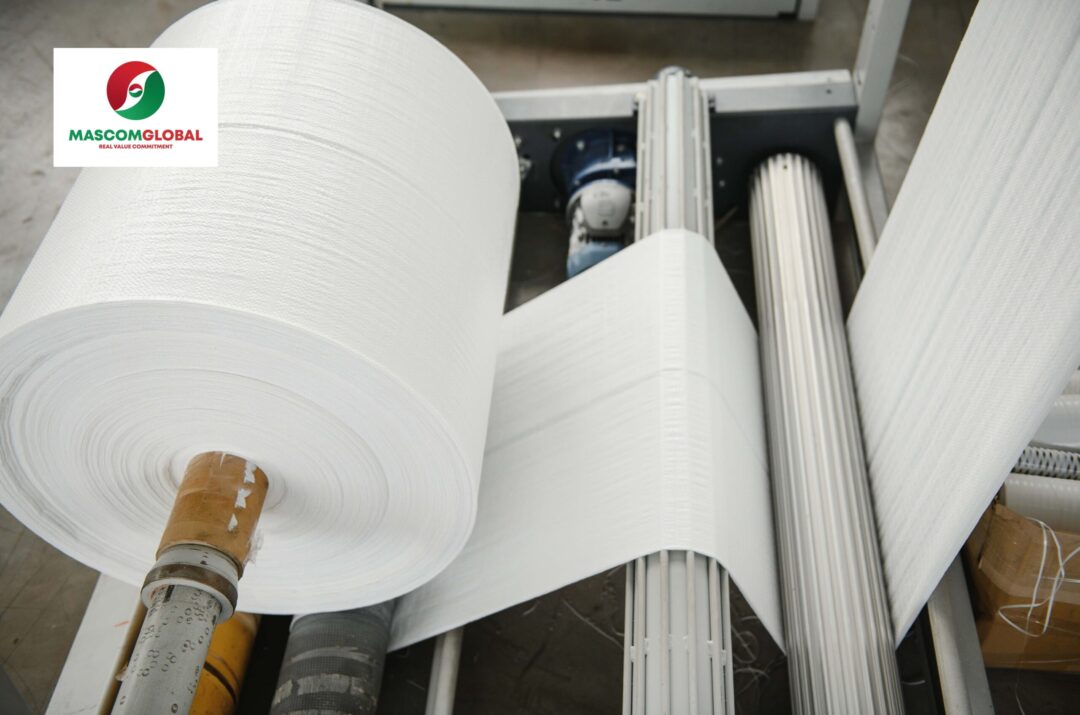
How to Use White Masterbatch?
When using White Masterbatch in production, consider the following steps:
- Select the right masterbatch based on your base polymer (PE, PP, PS, ABS, PVC…) to ensure good compatibility and dispersion.
- Determine the let-down ratio: Follow the manufacturer’s recommended dosage (typically 1–5%) to achieve the required whiteness and opacity.
- Mix and process properly: Ensure even blending of masterbatch and polymer during extrusion, blowing, or injection. Optimize machine settings (temperature, screw speed) to avoid streaks or poor dispersion.
- Quality control: Check whiteness level, gloss, coverage, and UV/yellowing resistance after production.
- Optimize cost-performance: Test different TiO₂ concentrations (e.g., 10–75%) to find the best balance between cost and desired appearance.
Why Choose Mascom Global White Masterbatch?
- Formulated with TiO₂ content from 10% to 75%, suitable for diverse applications.
- Compliant with EU RoHS, EN71-3, PAHs, PFOS/PFOA, and REACH-SVHC standards.
- Produced by Mascom Global, a leading Vietnamese manufacturer specializing in Filler Masterbatch, Color Masterbatch, and Additive Masterbatch with modern production lines and international quality control systems.
Versatile applications: Designed for blown film, injection molding, and extrusion blow processes, exported to numerous countries worldwide.
